
Why GMA pallets are necessary in your shipping plans
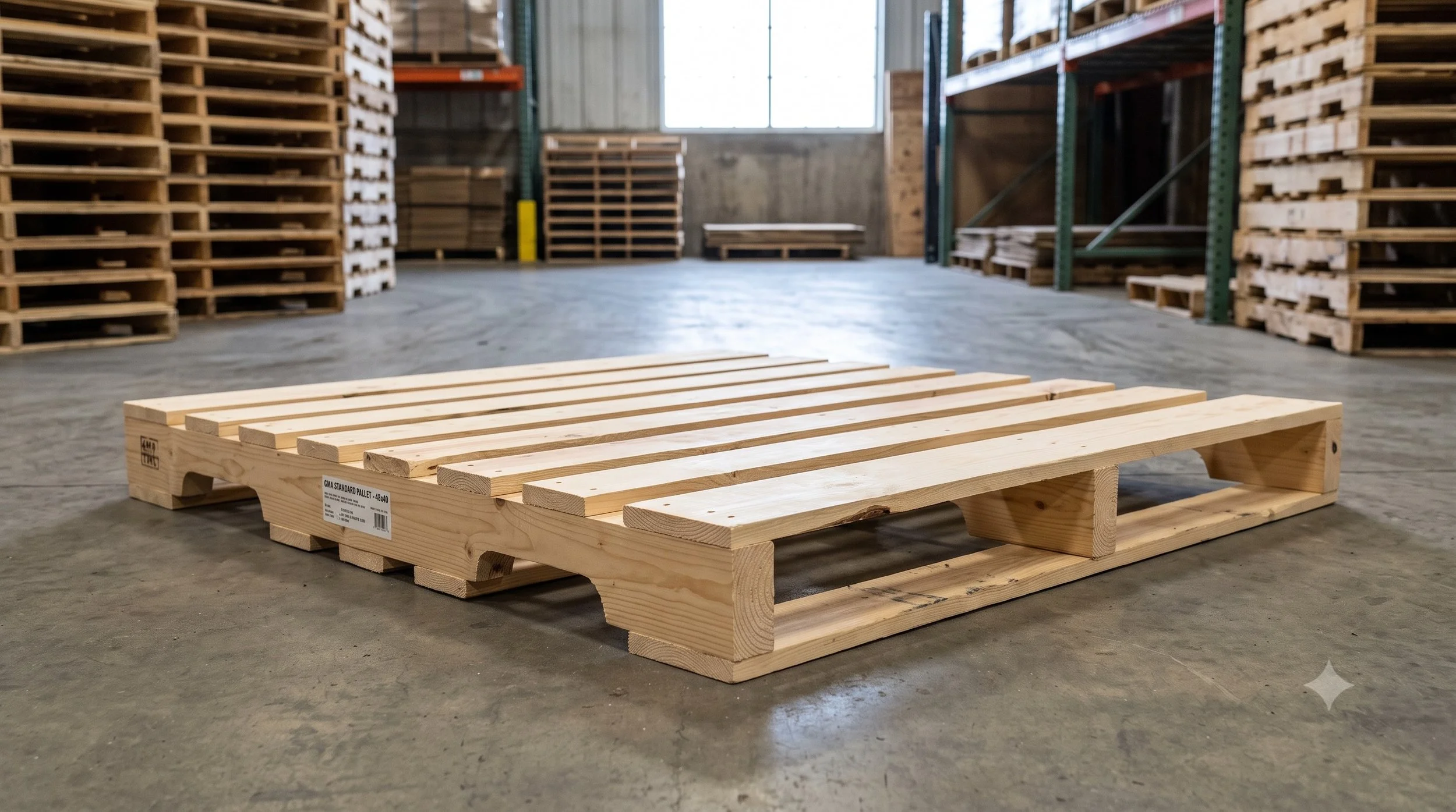
- A GMA pallet is the standard 48x40 pallet used widely across North American supply chains.
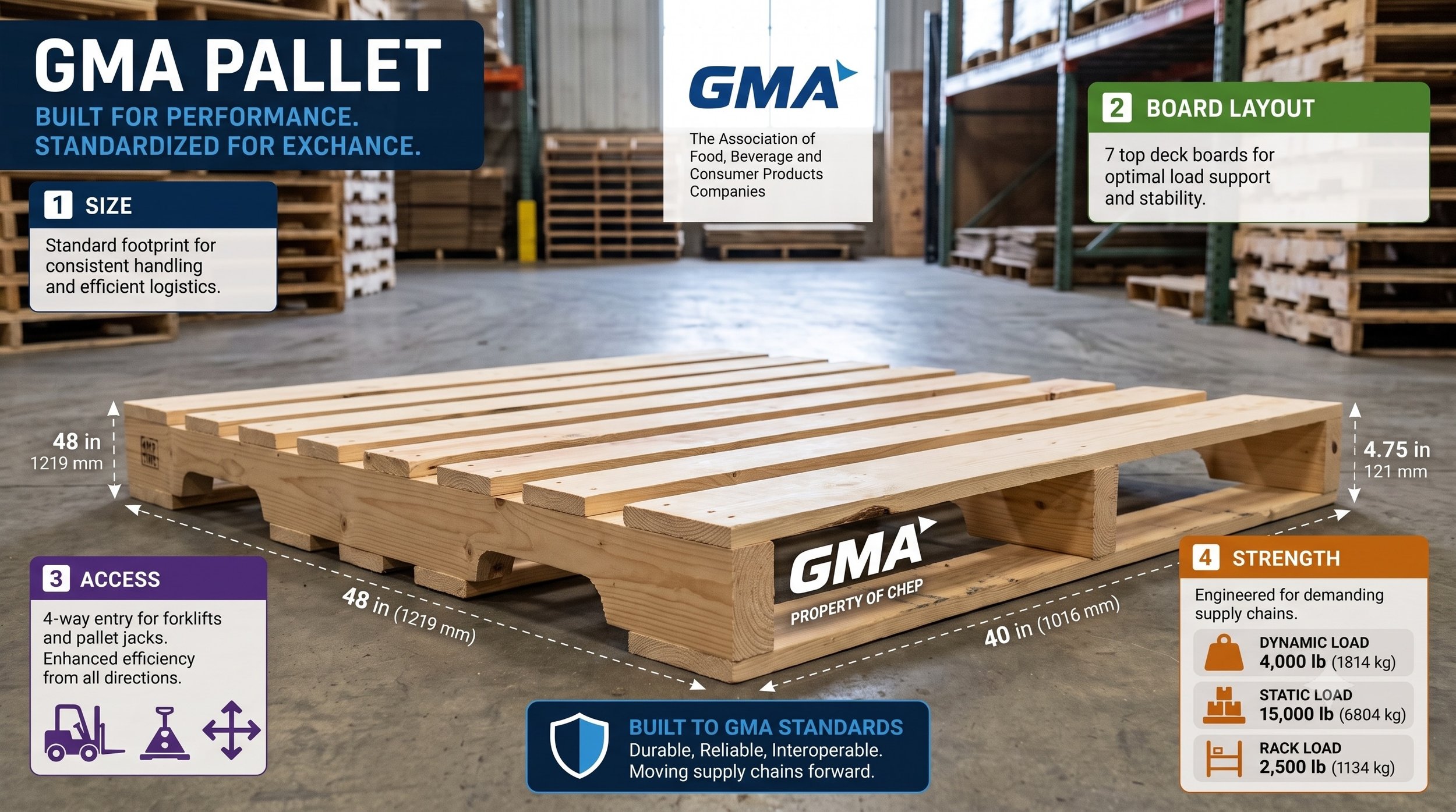
- Its standard size of 48 inches by 40 inches supports smooth loading, storage, and transport.
- The Grocery Manufacturers Association created the guidelines to help move goods more efficiently.
- Most are wood pallets, in new and recycled grades, and they work with pallet jacks and standard trailers.
- When a load does not fit the 48x40 footprint, a custom wood pallet built to the product can be the better option.
- GMA pallets reduce handling issues, improve consistency, and support better distribution planning.
Introduction
If you work with shipping, storage, or retail, you have likely come across the GMA pallet. This standard became a trusted format because it brought consistency to how goods move through busy operations. The Grocery Manufacturers Association created the original guidelines to make transport and handling easier, especially for food and consumer products. Today, understanding this pallet helps you choose the right platform for daily logistics, warehousing, and store delivery needs.
What is a GMA pallet?
A GMA pallet is built to standardized guidelines first set by the Grocery Manufacturers Association. In simple terms, it is the standard used to support consistent handling, transport, and storage across many businesses.
You will see it often in grocery stores, distribution centers, and manufacturing plants because a common size helps the supply chain move faster. The design became popular in the United States because businesses needed one reliable pallet that worked across equipment, facilities, and retail networks.
Role of GMA pallets in the U.S. supply chain
Across the United States, the GMA pallet plays a central role in the supply chain because it gives companies a shared platform for handling products. When the same standard moves from plant to truck to warehouse, you avoid delays caused by mismatched sizes.
That matters a lot in grocery distribution. Grocery stores, food producers, and distribution centers need quick movement of goods every day. A common pallet size helps workers load trailers, store products, and move inventory with fewer interruptions and less confusion.
Major retailers also rely on this format because standardization improves predictability. When pallets fit common equipment and storage setups, businesses can plan better and operate with fewer handling issues. That is a big reason the pallet became such a dependable part of American logistics.
Why GMA pallets have become the standard
There is a simple reason these became the go-to choice: they solve everyday logistics problems. Before one common size was adopted, companies dealt with wasted trailer room, slower handling, and more product damage. A consistent size changed that.

Today, the GMA pallet is often called the most widely used pallet in the country because it supports stronger supply chain efficiency across many industries. It works well in retail, food production, and warehousing, which makes it a practical North American standard.
- Its consistent size helps equipment and facilities operate without constant adjustments.
- It fits common truck and warehouse layouts, which improves space use.
- It supports safer, more predictable stacking and handling.
- It is accepted widely by retailers and distribution networks.
GMA pallet dimensions and specifications
The best-known part of GMA pallet dimensions is the size itself: 48 inches by 40 inches. This 48x40 footprint is used because it fits common handling systems and supports efficient loading in standard trailers.
Beyond size, the design includes features that help forklifts and pallet jacks move loads easily. It is also built to make better use of trailer space during shipping. To understand why that matters, it helps to look closer at the footprint, board layout, and support features.
The standard 48x40 inch size explained
When people refer to GMA pallets, they usually mean one thing: the standard size of 48 by 40 inches. These dimensions create the familiar footprint used throughout U.S. logistics and retail distribution.
That footprint is not random. It was chosen to work with common trailers, storage systems, and handling equipment. The dimensions also support a set board pattern that helps distribute weight more evenly during transport and storage.
Construction details and load capacity
Size is only part of the picture. A standard GMA pallet also follows common construction details that create a uniform platform for storage, lifting, and transport. These features make the pallet easier to use in busy facilities.
Load capacity varies quite a bit by grade and condition, so it helps to think in ranges rather than one fixed number. In motion, meaning while a forklift or pallet jack is carrying it, a typical GMA pallet handles roughly 2,300 to 2,800 pounds. Sitting still and stacked, a sound pallet holds far more. That range covers most routine warehouse movement and retrieval work.
- Three stringers provide core support under the deck boards.
- Seven top deck boards and five bottom deck boards create a stable surface.
- Two notches on each side allow four-way forklift entry.
- The 48x40 footprint stays compatible with common handling systems.
Materials used in GMA pallet construction
Most GMA pallets are made of wood, especially in food, retail, and warehouse settings. Hardwood, softwood, and mixed wood are all common, depending on cost, appearance, and expected use. When the standard 48x40 build cannot do the job well, a custom wood pallet built to the load is the usual next step.
Wood GMA pallets: types and grades
Wood remains the most common version of the GMA pallet. You can buy new wood pallets, but many businesses also use recycled ones sorted by condition. That is where pallet grades become important.
Grade A pallets are the highest quality recycled units. Within that group, premium grade pallets are closest to new and are often suitable for visible retail use. Grade B pallets show more wear and repairs, while Grade C pallets fall below common standards and may be unsafe.
- Premium Grade A pallets have minimal cosmetic wear and no stringer repairs.
- Regular Grade A pallets may include some repairs and still serve many operations.
- Grade B pallets are often chosen for warehousing and shipping where looks matter less.
- Grade C pallets usually have extensive repairs and poor appearance.
When a custom wood pallet beats a standard GMA
The standard 48x40 GMA pallet is built for broad compatibility, not for one specific product. Most of the time that is exactly what you want. But when a load does not match the 48x40 footprint, forcing it onto a standard pallet can cause overhang, wasted space, or damage. In those cases a custom wood pallet sized to the load often pays for itself in fewer damaged goods and better use of trailer space.
A custom wood pallet tends to make sense when:
- Your product is larger, longer, or an odd shape that overhangs a 48x40 deck. Overhang leaves the edges of the load unsupported and invites damage.
- The load is unusually heavy or concentrated in one spot, so it needs extra stringers, thicker boards, or hardwood for more strength.
- You are shipping costly machinery or equipment that deserves a base built to fit and protect it.
- You want to fit more units per truck or container by matching the pallet to the product footprint.
- Small parts would fall through a standard deck, so you need a tighter or closed-deck layout.
- The pallet has to line up with a specific machine, rack, or automated system.
A custom pallet costs more per unit than a standard one, so it is worth weighing your damage rates and how well your product cubes out. For high-value or hard-to-fit loads, the trade often works out. If you are not sure, describe the product and the route and a good supplier can tell you whether standard or custom is the better fit.
Compliance and industry guidelines for GMA pallets
GMA pallets matter because they are tied to an industry standard that supports consistency in food and retail logistics. When businesses follow the same standard, they make handling, storage, and transport easier across shared networks.
The original guidelines came from the Grocery Manufacturers Association, now called the Consumer Brands Association. These specifications are not just about size. They also cover features like board layout, access, and strength. Next, let us look at how those guidelines connect to food industry needs and who maintains them.
Food industry needs and GMA pallet standards
In the food industry, consistency matters at every stage of handling. GMA standards support that need by giving manufacturers, distributors, and retailers a shared format. When pallets follow one specification, product movement becomes more predictable and efficient.
This is especially useful where food and beverages move through warehouses, production sites, and store networks. A standard pallet helps reduce delays and handling problems, which supports smoother day-to-day operations.
International shipping adds another layer. Export shipments may require ISPM-15 heat treatment, and the stamp on treated wood includes a country code that shows where it was treated. Many businesses still prefer the familiar GMA format when preparing goods for export.
Who sets and maintains GMA pallet specifications
The original source of the specifications was the Grocery Manufacturers Association. That group created the pallet guidelines to bring order to food and consumer goods logistics, where inconsistent pallet sizes had caused waste and inefficiency.
Today, that organization is known as the Consumer Brands Association. The name changed, but the role of the standard remains important. Businesses across manufacturing, grocery distribution, and retail still rely on it because it supports common handling practices.
In practical terms, the specifications continue to shape how pallets are built and evaluated. Suppliers, recyclers, and users look to those established guidelines when they assess size, board configuration, transportability, and structural condition. That shared reference point is what keeps the system working.
Comparing GMA pallets to other common pallet types
A GMA pallet is not the only pallet type on the market, but it is the most familiar standard in the United States. Other formats, such as block pallets, other stringer pallets, and the Euro pallet, are used in different regions or for different handling needs.
Knowing the differences helps you choose the right pallet for your operation. Size, construction, and compatibility all matter. The next two sections break down how these common options compare and where each one tends to work best.
Key differences with Euro, block, and stringer pallets
Not all pallets follow the same footprint. GMA pallets use a 48x40 format, while the Euro pallet, also called the EPAL pallet, uses different dimensions, often around 47.2 by 31.5 inches. That difference affects how well they fit racks, trailers, and equipment.
Construction also varies. Block pallets are often used for heavier loads and automated settings, while stringer pallets rely on long support members beneath the deck. GMA pallets are stringer-built, but they follow a more defined standard than many general stringer pallets.
- GMA pallets follow one of the best-known standard sizes in North America.
- EPAL pallets are common in Europe and may not fit U.S. systems well.
- Block pallets are often favored for strength and automation compatibility.
- Treated wood for export carries a stamp that includes a country code.
Best use cases for GMA versus alternative pallets
If your business serves U.S. retail or grocery channels, the GMA pallet is usually the easiest choice. Its common size works well through the domestic supply chain and matches the expectations of many major retailers.
Alternative pallets can still make sense in certain situations. International shipping may call for another size, especially when goods move into systems built around regional standards. Some storage facilities or automated operations may also prefer other designs based on load type or equipment.
- Use GMA for grocery stores, domestic retail, and standard warehouse flow.
- Consider an alternative when shipping into non-U.S. pallet systems.
- Choose formats that fit standard trailers and your handling equipment.
- Match pallet type to customer requirements, especially with major retailers.
Benefits and practical uses of GMA pallets
For many businesses, GMA pallets offer a reliable solution because they bring consistency to shipping, storage, and handling. That consistency supports supply chain efficiency from the warehouse floor to final store delivery.
They are especially useful in warehouse storage, distribution centers, and retail networks where standard equipment is already in place. Because the pallets fit common systems, they slot into daily operations with little friction. The following sections show how those benefits play out in transportation and in facility layout.
Advantages for shipping and logistics
Shipping works better when pallets are predictable. The standard size used for GMA pallets helps carriers, warehouses, and retailers coordinate the movement of goods without constant adjustments. That saves time and reduces avoidable friction in the supply chain.
Because these pallets fit standard trailers and common handling tools, loading becomes more efficient. Their design also supports a dependable load capacity, which helps you move products with confidence across daily shipping routes.
- Standard sizing improves loading and route planning.
- Better fit in trailers helps reduce wasted space.
- Stable construction can lower product damage during handling.
- Common dimensions support faster equipment use.
- Consistency makes shipping easier across shared networks.
Impact on warehouse storage and distribution
Inside warehouses, a common pallet footprint makes planning easier. GMA pallets fit established rack layouts, support smoother storage, and simplify how products are staged for outbound orders. When everything follows one basic size, operations become easier to organize.
That same benefit extends to retrieval systems and handling tools. Pallet jacks and forklifts can move them efficiently, while teams in distribution centers spend less time dealing with odd sizes that slow down workflows or create space issues.
The size also helps with trailer space and store delivery planning. Since many facilities and trucks are built around this format, businesses can load more consistently and keep inventory moving through distribution with fewer surprises.
Availability, recycling, and sourcing of GMA pallets
If you are wondering where to buy GMA pallets, you have several sourcing options. Suppliers offer new, recycled, and remanufactured units, so you can choose based on budget, appearance, and the number of pallets you need.
Recycling also matters because wood can often be repaired, reused, or repurposed instead of discarded. That can lower environmental impact and reduce waste. The next sections cover practical buying channels and the best ways to reuse or recycle pallets after their first trip.
Where to buy GMA pallets in the United States
In the United States, businesses usually buy GMA pallets from pallet manufacturers, recyclers, or specialty suppliers. Your best choice depends on whether you need new wood, lower-cost recycled options, or a larger ongoing supply.
Some buyers need pallets that look clean for retail-facing use, while others just want strong units for shipping and storage. It also helps to think about the number of pallets required and whether your operation needs a steady delivery schedule.
- Buy from pallet manufacturers if you need consistent new builds.
- Work with recyclers for lower-cost repaired or reused pallets.
- Ask suppliers about custom builds for special handling needs.
- Confirm quality standards if pallets will be seen by major retailers.
Options for recycling and reusing GMA pallets
Wood GMA pallets are well suited for recycling and reuse. Instead of sending them to landfills, many businesses repair damaged units and return them to service. That keeps useful material in circulation longer and lowers environmental impact.
Once a pallet can no longer be reused in shipping, it may still have value in other forms. Retired wood pallets are often repurposed into products such as mulch or biofuel, which extends their usefulness beyond transport.
- Reuse pallets after inspection if they still meet operational needs.
- Repair damaged units to keep them in circulation longer.
- Recycle worn wood into secondary products when service life ends.
- Consider well-built pallets and recovery programs to reduce waste.
Conclusion
Understanding GMA pallets is a real advantage for anyone involved in shipping, logistics, or warehouse management. Their standardized dimensions, wood construction, and alignment with industry guidelines make them the go-to choice across many sectors. And when a load does not fit the standard 48x40, a custom wood pallet built to the product can be the smarter call. Knowing both options helps you protect your goods, use your trailer space well, and keep operations moving. For help choosing the right pallet, standard or custom, reach out and we will point you in the right direction.
Frequently asked questions
Are GMA pallets suitable for all types of goods?
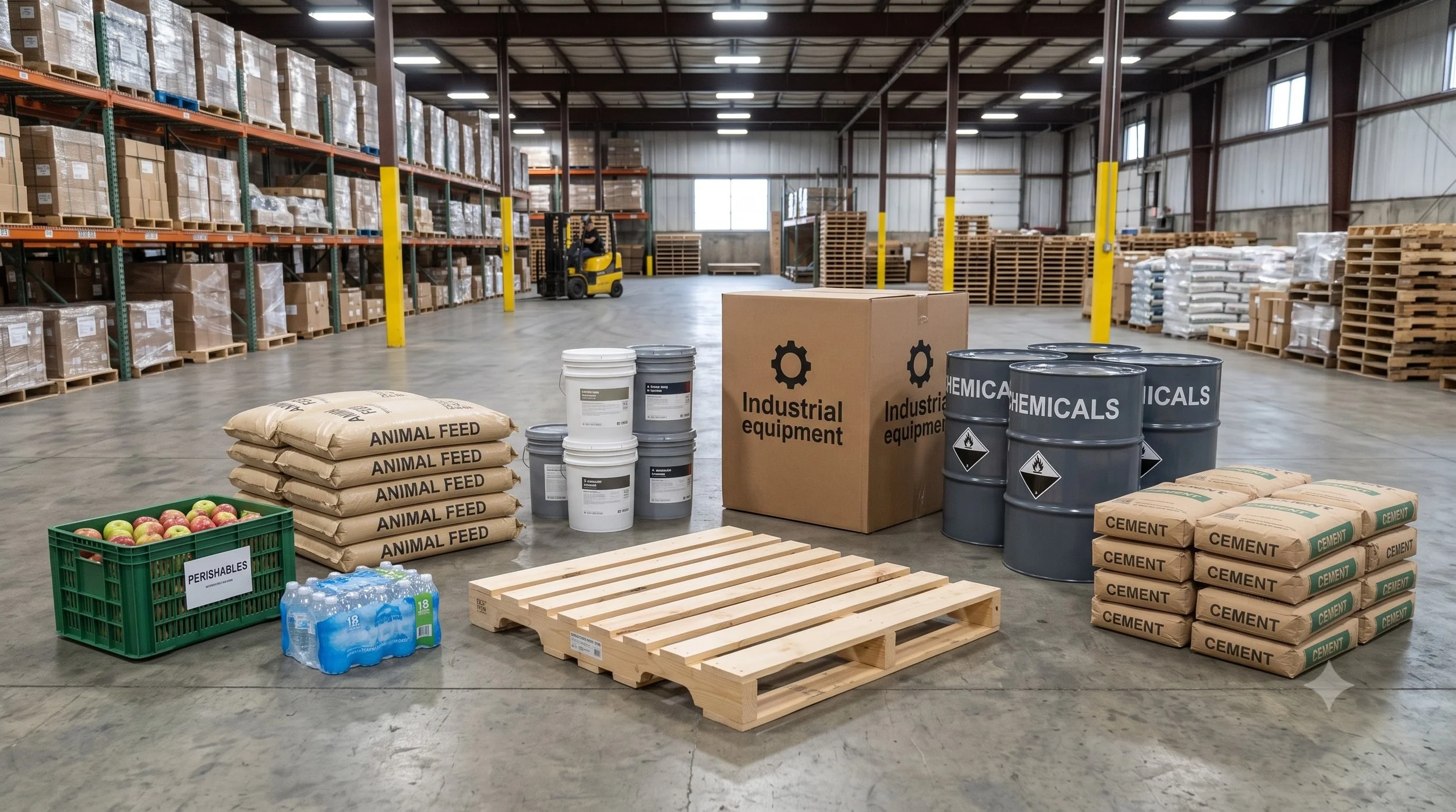
A GMA pallet works well for many products because its standard size fits common equipment across the supply chain. Still, suitability depends on the goods and the load. Wood pallets in the GMA format are widely used, but oversized, unusually heavy, or fragile items may need a custom build instead.
How does GMA pallet size affect transportation costs?
Pallet size affects transportation costs because standard dimensions help you use trailer space more efficiently. When shipments fit a common layout, companies can load more predictably and reduce wasted room. That improves supply chain efficiency and can lower the extra costs tied to awkward or inconsistent pallet footprints.
Can GMA pallets be customized for specific industry needs?
Yes. When the standard 48x40 is not the right fit, a custom wood pallet can be built around your product with changes such as reinforced boards, a tighter deck, a different footprint, or export heat treatment. That keeps you close to a familiar format while adapting the pallet to your specific load and handling needs.
About Atlas Pallets & Packaging
Atlas Pallets & Packaging is a Midwest pallet and packaging supplier based in Naperville, Illinois, in the heart of the Chicago freight market. We help manufacturers, warehouses, and 3PLs get the pallets they need from one reliable source, whether that is a standard 48x40 or a custom wood pallet built to your load. Tell us what you are shipping and we will help you land on the right size, grade, and build.
Call or text: 630-765-5476
Email: atlaspalletsllc@gmail.com