
Standard Pallets
Sizes, Grades, Pricing, & Performance Considerations
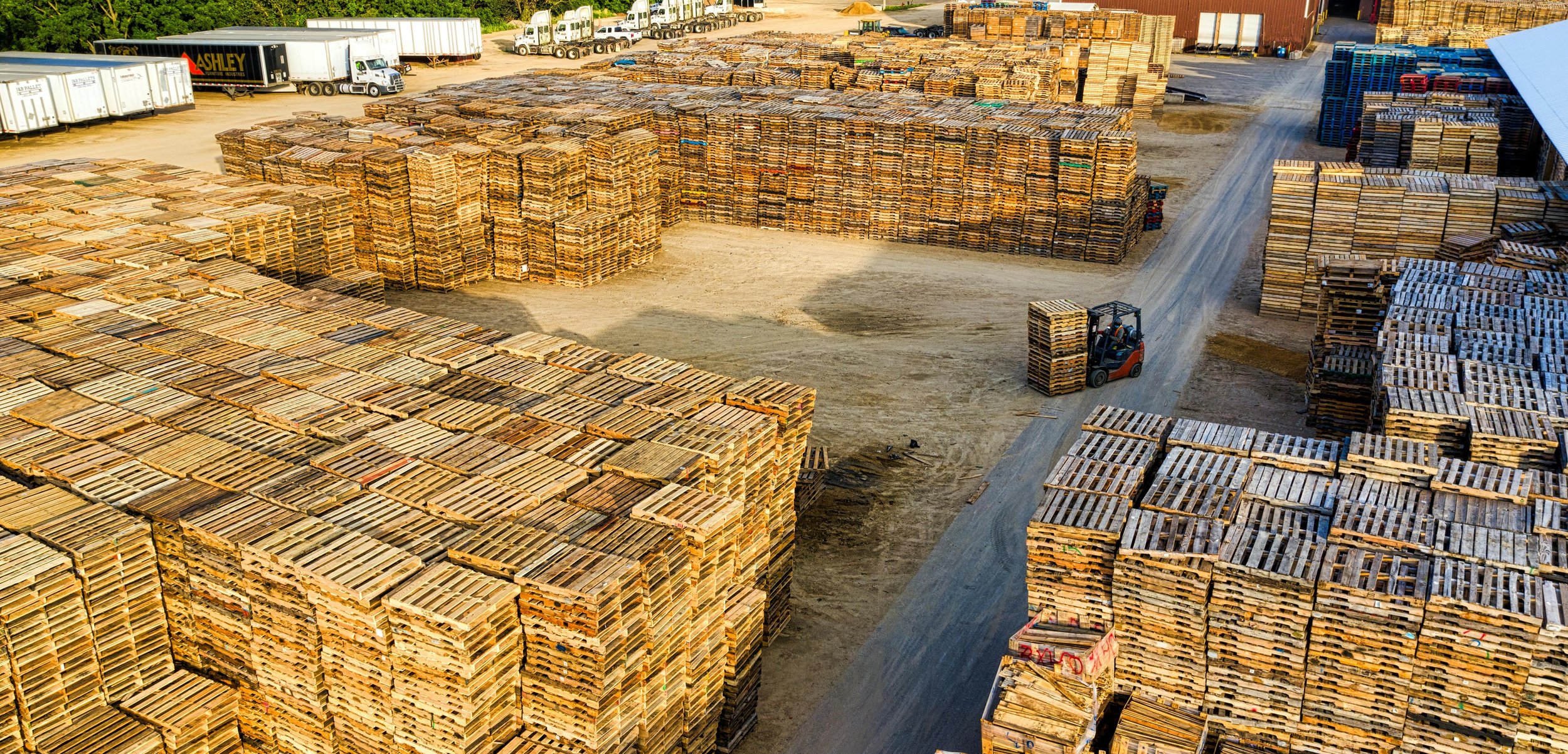
Standard pallets are the backbone of North American warehousing and distribution. If your product fits common dimensions and handling requirements, a stock pallet is often the fastest and most cost-effective solution.
The key is making sure the pallet actually fits your load, your storage environment, and your shipping requirements.
This page will help you determine:
What size pallet you need
Whether new or used makes sense
What grade is appropriate
What affects pricing
Whether your pallet will perform in stacking or racking
When a standard pallet may not be sufficient
If you already know what you need, you can Request a Quote at any time. If not, the decision guides below will help you evaluate the right direction.
Stock Pallets for Everyday Domestic Shipping
Standard pallets are the backbone of North American warehousing and distribution. If your product fits common dimensions and handling requirements, a stock pallet is often the fastest and most cost-effective solution.
The key is making sure the pallet actually fits your load, your storage environment, and your shipping requirements.
Standard Pallet Sizes at a Glance
A standard pallet refers to commonly stocked sizes and construction styles used across supply chains. The most widely used size in the U.S. is the 48×40 footprint, often referred to as a GMA pallet.
A Stock Pallet Is the Right Choice When
- 01Your product dimensions are uniform
- 02Weight is evenly distributed
- 03No special blocking or bracing is required
- 04Loads are stable and shrink-wrapped
- 05You are shipping domestically
- 06You do not require engineered load calculations
In these cases, a properly selected standard pallet is reliable, efficient, and economical. If your load is irregular, heavy, top-heavy, or export-sensitive, the resources below will help you evaluate alternatives.
New Pallets vs. Recycled Pallets
Choosing between new and recycled inventory is primarily an operational decision, not just a budget one. Here is how they compare at a glance.
New Pallets
- Uniform dimensions and consistent load performance
- No prior damage or repairs
- Cleaner presentation. Better for customer-facing use
- Required for some food, pharma, and retail programs
- Higher structural consistency under repeated use
Recycled Pallets
- Significantly lower cost. Ideal for internal moves
- Good for one-way or low-reuse shipping
- Variable appearance and minor dimension variation
- May include repaired boards. Inspect before use
- Grade A recycled can approach new pallet performance
What Drives Standard Pallet Pricing
Standard pallet pricing fluctuates with several key factors.
- 01Lumber markets. Softwood supply and mill output set the base cost of every new pallet.
- 02Regional supply and demand. Availability in the Midwest moves independently of other regions.
- 03Volume requirements. Truckload orders price differently than LTL quantities.
- 04Condition. New inventory runs higher than Grade A recycled, which runs higher than #2.
- 05Heat treatment. ISPM-15 compliance adds cost and coordinates lead time.
Load, Stacking, and Racking Limits
Not all standard pallets perform the same way in every environment. If your pallets will be stored in racking systems or double stacked, specifications matter.
ISPM-15 and International Shipments
If your shipment is leaving the United States, ISPM-15 heat treatment may be required.
Heat-Treated Lumber, Official Mark, Documentation
Most countries require ISPM-15 compliant wood packaging for imports. Heat-treated pallets must be stamped with an official mark showing the treatment type and country of origin. Buying pallets without verification of compliance can lead to customs delays or shipment rejection.
How Atlas Handles Standard Pallets
Atlas Pallets operates on a lean, supplier-matched model. We do not carry unnecessary inventory. Instead, we source based on your specifications and coordinate direct delivery. That allows us to:
- Source both new and recycled inventory across the Midwest supplier network
- Coordinate heat-treated pallets when export compliance is required
- Adjust quickly to market availability without locking you into long-term pricing
- Stay price competitive without sacrificing specification clarity
You tell us what you're shipping, where it's going, and how it will be handled. We'll recommend the appropriate pallet configuration and quote it directly.
Keep Reading
Ready for a Standard Pallet Quote?
If you know your size, grade, and quantity, request pricing and we'll respond promptly. If you're unsure, tell us about your product and handling requirements. We'll help you determine whether a standard pallet is appropriate before you commit.
Request a Quote →