
Stretch Film: Blown, Cast, and Engineered
What stretch film actually does, the difference between cast and blown, hand versus machine grade, and why a thinner engineered film can beat a thick one.

Stretch film looks like a simple roll of plastic, but the wrong one costs you twice: once in film you overuse, and again in loads that arrive leaning or fallen, with the film sagging loosely like Julius Caesar's toga. The job of film is not to cover the load. It is to hold the load together with steady containment force all the way to the destination. This page covers the two ways film is made, the two ways it is applied, and how to read what you are actually buying.
What stretch film is doing
When film is stretched around a load, it wants to shrink back. That pull is called containment force, and it is what actually keeps boxes from shifting. More film is not the answer. The right film, stretched the right amount, holds a load with less plastic. That is the whole game.
Cast versus blown
Almost all stretch film is one of two kinds, made two different ways. They behave differently on the load.
Cast film
- Clear and glossy, so you can read labels through it.
- Quiet and easy to unwind, which hand wrappers like.
- Stretches smoothly and consistently.
- Good all-purpose choice for uniform, boxy loads.
Blown film
- Hazier and louder off the roll, but tougher.
- Better puncture resistance for sharp or uneven loads.
- Higher cling and better memory, so it holds a shifting load harder.
- Costs a bit more, and earns it on demanding loads.
One shipping manager told us he preferred blown film because he could hear when his workers took a break.
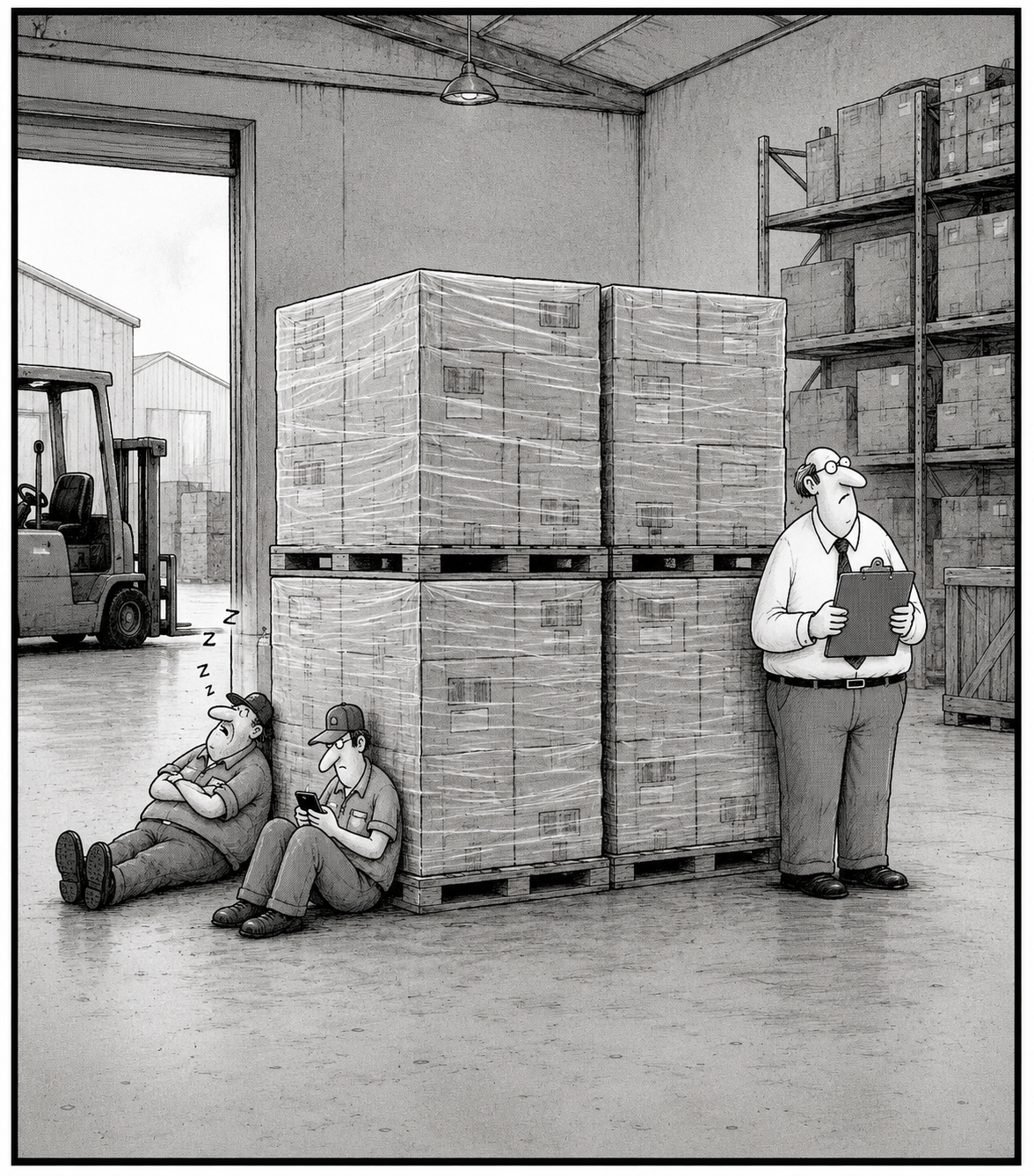
You can always hear a blown-film wrap.
Boxy, even pallets that just need to be held together lean toward cast. Loads with corners, edges, or odd shapes, or loads that take a rough ride, lean toward blown.

Hand grade versus machine grade
Hand grade comes on short, light rolls made to wrap by hand with a dispenser. Machine grade comes on longer, heavier rolls made for a stretch wrap machine that pre-stretches the film automatically.
The rule of thumb is volume. Below roughly fifteen loads a day, hand wrapping is usually fine. Above that, a machine and machine film pay for themselves in film saved and wrists spared. If you are wrapping a lot by hand and going through cases of film, it is worth pricing a machine against what you spend now.


Gauge, equivalent gauge, and pre-stretch
Gauge is the thickness of the film. Thicker is not automatically better. Two things trip people up here.
- True gauge versus equivalent gauge: some films are engineered to perform like a thicker film while actually being thinner. A film sold as an equivalent to 80 gauge may be thinner than 80 gauge and still hold as well, for less plastic per load.
- Pre-stretch: a machine can stretch film several times its length before it hits the load. Film that pre-stretches well covers far more pallets per roll. This is where the real savings hide, not in the sticker price of the roll.
The takeaway: do not shop film by thickness alone. Shop it by how many good loads a roll gives you. That is a conversation about your loads, which is why we quote it rather than list it.
Engineered and high-performance film
Engineered films are built in multiple thin layers so they resist punctures and pre-stretch further than a plain film of the same thickness. For a busy operation, switching to an engineered machine film often means using noticeably less plastic for the same or better hold. If your film spend is a real line item, this is the first place to look.
How to pick, in short
- Boxy, even loads, low volume: cast hand film.
- Sharp, heavy, or uneven loads: blown film.
- Fifteen-plus loads a day: machine film, ideally engineered, on a stretch wrapper.
- Loads arriving leaning: usually a wrap-technique or containment-force problem, not a reason to jump to thicker film.
Frequently asked questions
Cast or blown film, which do I need?
Cast film is clear, quiet, and a good all-purpose choice for boxy, even loads. Blown film is tougher, with better puncture resistance and cling, so it holds sharp, heavy, or uneven loads that take a rough ride. If you are not sure, send a photo of a typical load and we will match it.
Hand film or machine film?
It comes down to volume. Below roughly fifteen loads a day, hand film is usually fine. Above that, a stretch wrap machine and machine film pay for themselves in film saved and wrists spared.
Is a thicker gauge always better?
No. Gauge is just thickness, and thicker film does not automatically hold better. What matters is containment force and how many good loads a roll gives you. A thinner engineered film often outperforms a thick basic film for less plastic per pallet.
What does "equivalent" gauge mean?
Some films are engineered to perform like a thicker film while actually being thinner. A film sold as an equivalent to 80 gauge may be thinner than 80 gauge and hold just as well, using less plastic per load.
My loads keep arriving leaning. Do I need thicker film?
Usually not. Leaning loads are more often a wrap-technique or containment-force problem than a film-thickness problem. Before you buy thicker film, it is worth checking how the load is wrapped and how much the film is pre-stretched.
Tell us what your loads look like and how many you wrap a day. We will match a film to them and quote it. If a machine would save you money, we will say so and show the math.
Get a Film Quote →