
Strapping: Poly, Steel, and the Tools to Run It
What holds a load on the pallet through a rough freight lane. Poly versus steel, the buckles and seals, and the tensioner to pull it tight.
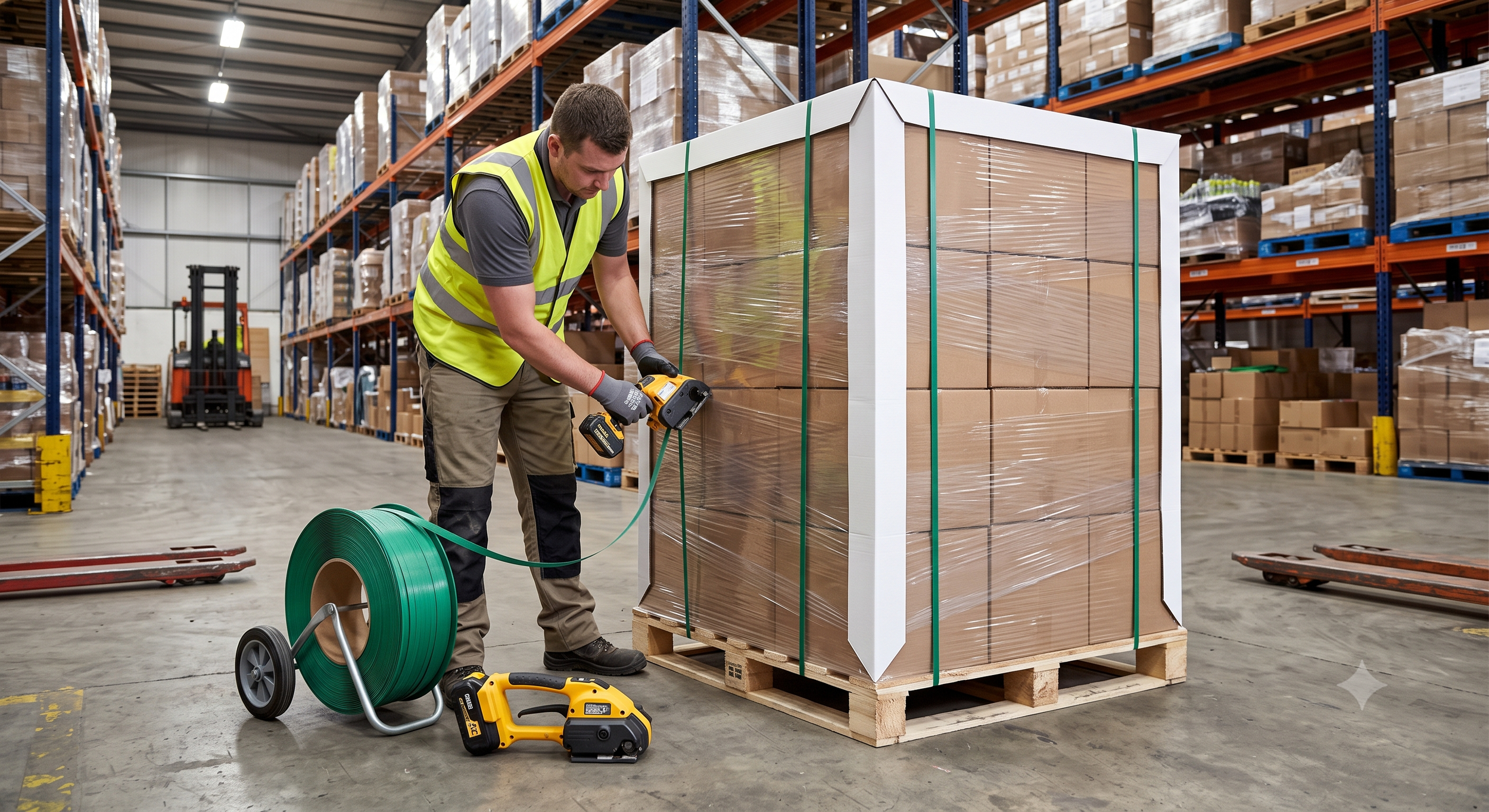
Strapping is what keeps a load together as one unit: bundling product, holding it on the pallet, and reinforcing a heavy carton. It is a securement job, not a cushioning job, and picking the right strap is mostly about how heavy the load is and how much it can flex. This page covers the two main strap types and the hardware to actually tension and hold them.
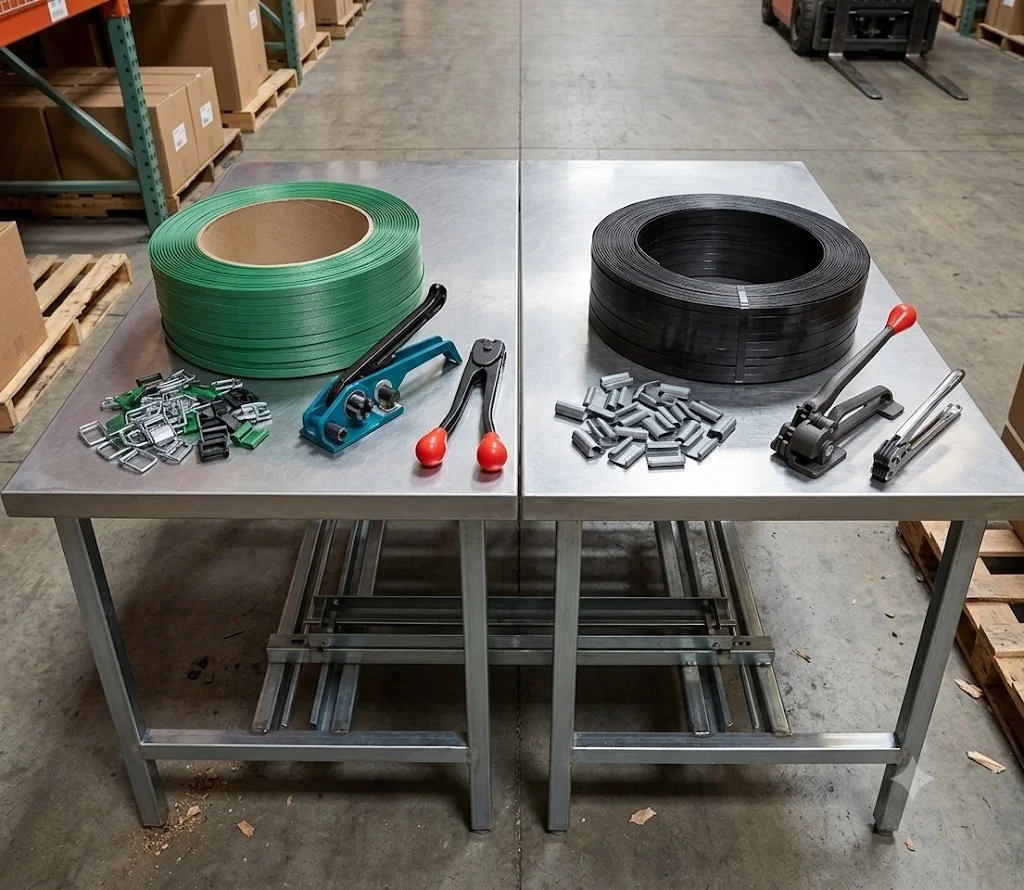
Poly strapping
- Plastic strap, usually polypropylene or polyester.
- Right for light to medium loads: unitizing boxes, holding product on a pallet, closing cartons.
- Polyester, the stronger plastic strap, has good retained tension and some give, so it holds loads that settle or shrink slightly in transit.
- Safer and easier to handle than steel, and it will not rust or mar most products.
Steel strapping
- The strongest option, for heavy and rigid loads that will not compress.
- Used for steel product, bricks and blocks, heavy coils, and sharp-edged loads that would cut plastic.
- Very little stretch, so it holds a rigid load firmly but can loosen if the load settles.
- Requires care to handle. The cut ends are sharp and it stores energy under tension, so be careful when cutting it. Those ends can spring back.
Poly or steel, in short
If the load has any give, or you are unitizing boxes and pallets, poly usually wins on cost, safety, and handling. If the load is genuinely heavy and rigid, or has edges that would slice plastic, steel is the answer. Your existing guide walks through this decision in more detail, linked below.
The hardware that makes strapping work
Strap is only half of it. To run it you need a way to tension it and a way to hold that tension.
- Buckles and seals: hold the strap ends together once tensioned. Seals get crimped, buckles thread through. Different loads and straps use different ones.
- Tensioner: pulls the strap tight before you seal it. Manual for low volume, battery-powered combination tools for higher volume that tension and seal in one motion.
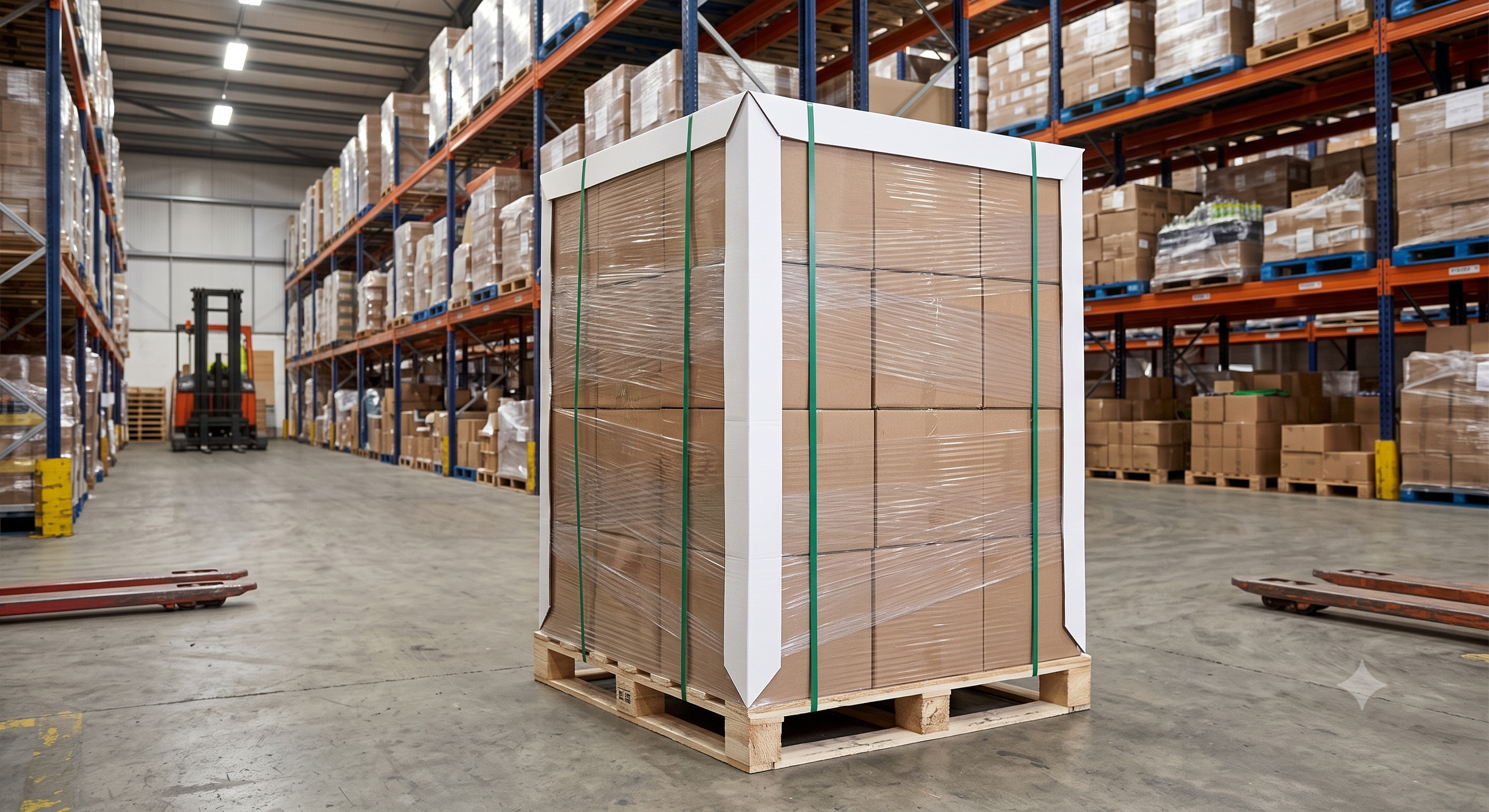
- Edge protection: cornerboard under the strap spreads the pressure so you can pull tight without the strap crushing the load's edges. It pairs directly with strapping.
Edge protection: cornerboard
Cornerboard is rigid angle board, usually laminated kraft, that runs down the vertical edges of a load. It is the piece that lets strapping and film do their job without turning a tight load into a crushed one. On anything with soft or square edges, it earns its place fast.
- Spreads strap and film tension. Without it, a tight strap digs into the corners. Cornerboard spreads that pressure so you can pull tight and actually secure the load.
- Protects the corners in transit. Corners take the hits from forklifts, other freight, and handling. Cornerboard absorbs the knocks and abrasion before they reach your product.
- Adds vertical stacking strength. Boards down the edges help a load carry weight from above, so pallets can be stacked in a trailer or in racking without crushing the one on the bottom.
- Holds the load together. It ties the top of a load to the pallet as one unit, which cuts shifting on a rough lane.
It comes in different thicknesses and leg lengths, heavier board for heavier loads. Reach for it on boxed loads you strap tight, on anything double-stacked, and on freight that rides LTL and gets handled several times before it lands.
Frequently asked questions
Poly or steel strapping, which do I need?
If the load has any give, or you are unitizing boxes and pallets, poly usually wins on cost, safety, and handling. If the load is genuinely heavy and rigid, like steel product or heavy coils, or it has edges that would slice plastic, steel is the answer.
What is the difference between polypropylene and polyester strapping?
Both are plastic. Polypropylene is the lighter-duty strap for bundling and closing cartons. Polyester is the stronger plastic strap, with good retained tension and some give, so it holds heavier loads and loads that settle or shrink slightly in transit. It is often a direct replacement for light-gauge steel.
Do I need a tensioner, or can I strap by hand?
You need a way to pull the strap tight and hold it. A manual tensioner and sealer work for low volume. If you are strapping all day, a battery-powered combination tool that tensions and seals in one motion pays for itself in speed and consistency.
What are buckles and seals for?
They hold the strap ends together once the strap is tensioned. Seals get crimped over the overlap, buckles thread through. The right one depends on the strap type and the load, and we match them when we quote the setup.
Why use cornerboard with strapping?
Cornerboard under the strap spreads the pressure across the load's edges, so you can pull the strap tight enough to actually secure the load without the strap crushing the corners. It is the difference between a tight load and a damaged one on anything with a soft or square edge.
Tell us what you are strapping and how heavy it runs. We will match the strap and the tools to it, and quote the whole setup so you are not sourcing strap, seals, and a tensioner from three places.
Get a Strapping Quote →