
Custom Wood Pallets Built for Your Load: A Chicago-Area Buyer's Guide
If a 48 by 40 GMA pallet does not fit your load, will not survive your route, or will not satisfy a downstream customer, you need a custom build. Atlas runs that work every day for Chicago-area manufacturers.
On this page
When a standard pallet is not the answer
1,274. That is the number of 104 by 96 inch heavy-duty custom pallets Atlas has shipped since January to an automated warehouse customer. 155,428 board feet of wood. To put that in perspective, if you were to line up 8-foot 2x4s, 155,428 board feet would extend 66 miles.
Each one carries custom racking to a distribution center where the floor is busy, the racks are tall, and a pallet failure is not a paperwork problem, it is a shutdown.
That program has been the single biggest custom build in Atlas's history. The pallets get built to a spec the customer wrote, heat-treated when the destination calls for it, and trucked to the install site on a schedule Atlas keeps.
It is also the loudest example of what most of this page is about. Standard 48 by 40 GMA pallets are a commodity. Atlas sells those too, and there is a place for them. But most of what Atlas actually provides in a given week is custom. A buyer calls because the load is too big, too small, too heavy, too tall, going overseas, or because somebody downstream wrote a spec the catalog cannot fill. This page covers what those custom builds look like and how Atlas runs them.

A 104 by 96 inch heavy-duty Atlas pallet on the production floor.
1,274
104 by 96 robotics-program pallets shipped, January through May 2026
486,668
Pounds of wood
66
Miles of wood, strung end-to-end
5,350,800
Pounds of steel product shipped on those pallets
Five reasons buyers come to Atlas for custom
Most calls Atlas gets fall into one of these five buckets. If your job sounds like any of them, the standard pallet is probably not the right one.
1. The load is bigger than 48 by 40
Hose reels, A-frame freight, oversized castings, full coils of steel, finished tooling. None of these fit a standard pallet. Atlas builds in the 60 inch, 78 inch, 84 inch, 96 inch, 120 inch, 135 inch, 168 inch, 178 inch, 226 inch, and 236 inch sizes regularly. A 120 inch A-frame design is in continuous production for a Chicago-area marble slab importer, with 39 full truckloads shipped to date. A national professional tool storage manufacturer has run four custom sizes through Atlas to cover its product line. A Chicago-area plastics manufacturer ran extra-long pallet programs through Atlas in 168, 178, 226, and 236 inch sizes, with 21 full truckloads shipped.
2. The load is smaller and the pallet is hauling weight per square foot
Heavy compact products are the opposite problem. The pallet has to fit a tight footprint and still carry serious weight. The 72 by 32 two-way pallet that ships to a national commercial kitchen equipment manufacturer is one example, with 1,200 units shipped. The 72 by 21 block heat-treated skid built for an Illinois process instrumentation manufacturer is another. The 44 by 25 three-stringer built for a Chicago-area plastics molder is a third. Any of these would crack a stock pallet.
3. The freight is going overseas and needs ISPM-15 heat treatment
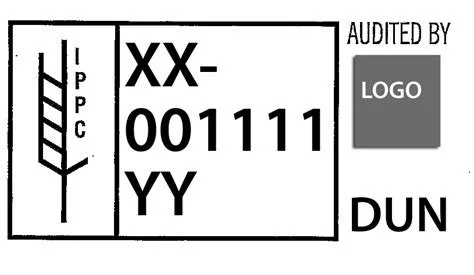
If wood packaging is crossing a border, it has to be heat-treated to 133 degrees Fahrenheit for 30 minutes and stamped with the IPPC mark. Customs at the destination port will not accept it otherwise. Atlas heat-treats every export pallet, applies the stamp, and provides the paperwork. A national steel and specialty-alloy distributor runs its export pallet and crate program with Atlas on this spec.
4. The pallet has to come back
Returnable pallet programs need a build that survives multiple trips. The 104 by 96 robotics-installation pallet is the headline example. Reinforced runners, full deck, no shortcuts on the lumber grade. Atlas tracks the count out and rebuilds anything that comes back damaged. Returnable is a relationship, not a transaction, and the pallet build reflects that.
5. A customer downstream wrote the spec
Sometimes the spec is not yours, but this is a requirement from a picky customer. At Atlas, we love picky customers, because it gives us the chance to show how detailed we can be. We find out what the specs are, ask the right follow-up questions, and generate 3D models, with diagrams for approval.
Common builds Atlas runs in volume
These are the programs Atlas has shipped against in 2024, 2025, and into 2026. Real customers, real specs, real volume. Every unit count on this page comes from actual invoice records.
1,274
Heavy-duty 104 by 96 returnable pallets for a robotics installation program
1,800
Notched, winged heavy-duty skids for steel
2,280
Recurring 36 by 36 two-way pallets for a Chicago-area beverage operation
104 by 96 heavy-duty returnable pallet
1,274 units shipped to date. The single biggest program in Atlas's history. Built for an automated warehouse customer that deploys equipment into distribution centers on the West Coast and in Mexico. Reinforced for repeat trips, heat-treated for the international leg. Atlas runs steady delivery waves on a pace the customer's install schedule sets.


Notched, winged heavy-duty skids for steel
1,800 units across the 24 by 42 and 24 by 78 sizes. Steel needs a different kind of pallet. The notch lets the strapping pass through cleanly. The winged base supports overhanging product. Atlas worked the spec out with a national steel and specialty-alloy distributor and has been running it ever since. The full case study covers this program in detail.
120 inch A-frame pallet for marble slab shipping
39 full truckloads shipped of the 120 inch A-frame design to date, plus runs of the shorter 135 inch A-frame. The A-frame holds tall freight that must be handled vertically. A Chicago-area marble slab importer uses these to ship marble slabs that get fabricated into countertops across the country.
36 by 36 two-way pallet, recurring program
2,280 units shipped. The smaller-spec recurring food and beverage programs add up. A Chicago-area beverage operation orders steadily across the year on a 36 by 36 footprint that matches their product line. This is the kind of unglamorous repeat work that tells you a customer is happy.
72 by 32 two-way pallet
1,200 units shipped to a national commercial kitchen equipment manufacturer. The 72 by 32 fits the customer's product footprint exactly, and the two-way design works with their fork equipment. Atlas keeps the build queued so reorders ship inside a week.
Custom pallet line for a multi-size product catalog
Four custom sizes (30 by 78, 36 by 60, 30.5 by 40.5, 48 by 60) for a national professional tool storage manufacturer. Their products do not fit one pallet size, so Atlas built a small library that covers the full catalog.
Extra-long pallet program
An extra-long pallet program for a Chicago-area plastics manufacturer in 168, 178, 226, and 236 inch sizes. The decks support oversized loads without overhang or sagging in transit.
21
Full truckloads of the 168, 178, 226 and 236-inch pallets delivered
48.5
Miles of board
??
Weight of product delivered
There's no way of knowing this exact number, because each pallet was used 5 to 10 times before being put out to pasture. Custom pallets are not an expense you have to flush, but rather an investment that pays off again and again.
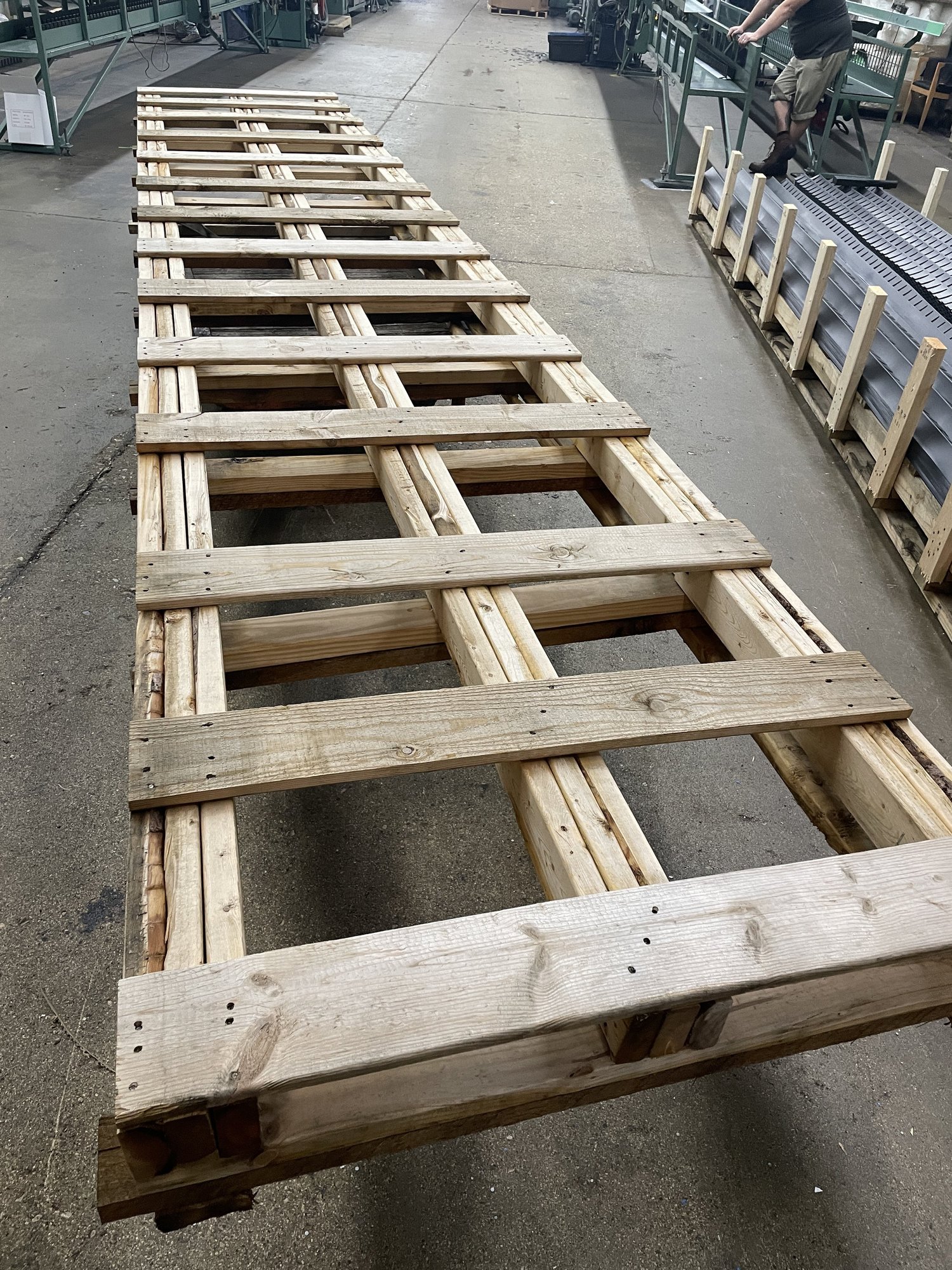
A 226 inch pallet on its fifth re-use cycle.
How Atlas runs a custom pallet quote
The quote process is built to be fast and direct. You call, Atlas asks the right questions, and you get a real number back the same day or the next morning. Lean is core to how Atlas operates. You have one point of contact who handles your account, every time. There is no ticket queue, no rep rotation, no escalation path.
What Atlas needs to quote
Six things, in this order. Load weight per pallet. Pallet dimensions, length by width. Number of top boards, bottom boards and stringers. Heat treatment yes or no, depending on destination. Quantity per delivery and how often. Delivery ZIP code so freight gets priced right.
If you do not know one of those, that is fine. The conversation usually fills in the gaps. A photo of the load on a current pallet helps a lot if you can send one.
Where Atlas pulls ahead
Atlas specializes in oversized work and specialty builds. Of course we provide standard 48 by 40s, the recycled grades, and standard heat-treated work. But the places Atlas pulls ahead are where the build needs to be designed (returnables, A-frames, oversize decks, notched skids) and where the customer wants the same person tracking the program from quote through delivery.
Lead time, honest answer
A new spec ships 7 to 10 days from the approved drawing to the first delivery. That covers the build queue, any heat-treat cycle, and the truck. A repeat order on a spec Atlas has built before runs on a 7 day standard cadence. Recurring scheduled programs run faster than that. Rush work is possible but usually costs more on freight. Atlas will tell you exactly what the lead time looks like before you commit.
Why this matters
The big national pallet company will quote a custom build, but you will wait two to four weeks for a number, then talk to a different rep every time. Atlas runs the same quote in a day, with the same person on the line who remembers what you bought last time.
When a standard 48 by 40 is the right answer
If your load fits a 48 by 40 footprint, weighs under 2,500 pounds, and is going to a domestic customer who does not have a spec sheet, a standard GMA pallet is plenty. Atlas does not push custom when standard fits. Recycled #1 and #2 pallets are in stock and priced for Chicagoland delivery.
We are happy to provide standard pallets all day long. But Atlas's sweet spot is when your job becomes anything other than truly standard.
Returnable program
Heavy-duty build that survives multiple trips between your distribution centers. Reinforced runners and deck. Atlas tracks the count and rebuilds anything that comes back broken.
Oversized one-shot
For loads bigger than 48 by 40. Built for the trip out, then disposed of or reused as the customer prefers. Common for hose reels, A-frames, and equipment.
Heat-treated export
ISPM-15 stamped and ready for international freight. Atlas handles the stamp, the paperwork, and the lead-time math.
Why a Chicago-area manufacturer picks Atlas for custom work
Atlas runs lean by design. That is not a limitation, it is the structure that keeps Atlas fast, accountable, and honest on price for serious custom work. When you call Atlas, you talk to the person who owns the relationship. When the spec changes mid-program, you talk to the same person. When the truck is late, you talk to the same person. There is no ticket queue, no monkeying around with trying to find who in the company is responsible for what.
The other piece is partnership rather than merely a transaction. Most of Atlas's customers describe the relationship as a partnership, not a faceless order. That is by design. Atlas remembers what you bought last time, what your downstream customer's spec looks like, and which of your shipments tend to run heavy. That memory shows up in faster quotes and fewer back-and-forths.
Frequently asked questions
What is the difference between heat-treated and kiln-dried pallets?
Heat treatment kills any pests in the wood and spoils the tasty fibers that attract bugs in the first place. Importantly, it makes the pallet legal for international freight. Kiln drying is actually a longer, more effective process, but there is no regulated documentation of it. If you are shipping overseas, you need heat-treated and stamped. If you are shipping domestically, kiln-dried is plenty.
Block pallet or stringer pallet, which one do I need?
Stringer pallets are the standard 48 by 40 GMA design with three or four runners going one direction. Forklifts can pick from two sides. Block pallets have nine wood blocks and forklifts can pick from all four sides. Block costs more but moves faster in busy operations and racks better.
How do I know if I need a crate instead of a pallet?
If your product is fragile, irregularly shaped, or going overseas, a crate usually beats a pallet plus stretch wrap. If your product can sit flat and be wrapped, a pallet is plenty. The custom crates page covers when to make the jump.
When do I need cornerboards on a palletized load?
Anytime your load has sharp edges that strapping or stretch wrap could cut into, or anytime the product is stacked tall enough that the top corners take all the lateral force in transit. Atlas provides several cornerboard sizes.
What lead time should I expect on a brand-new custom spec?
7 to 10 days from the approved drawing to the first delivery. Repeat orders on a spec Atlas has built before run on a 7 day cadence. Recurring scheduled programs run faster than that. If you need it sooner, say so up front and Atlas will tell you what is possible.
Does Atlas serve customers outside Chicagoland?
Yes. Freight costs vary. Call for a quote.
Get a custom pallet quote
Send your load weight, deck dimensions, monthly volume, and delivery ZIP. We call back the same day with a real number, no run-around.
Get a Quote