
Void Fill & Cushioning: Kraft Paper, Bubble, and Loose Fill
How to fill empty space and protect what's inside the box, without overpacking every order or driving up damage claims.
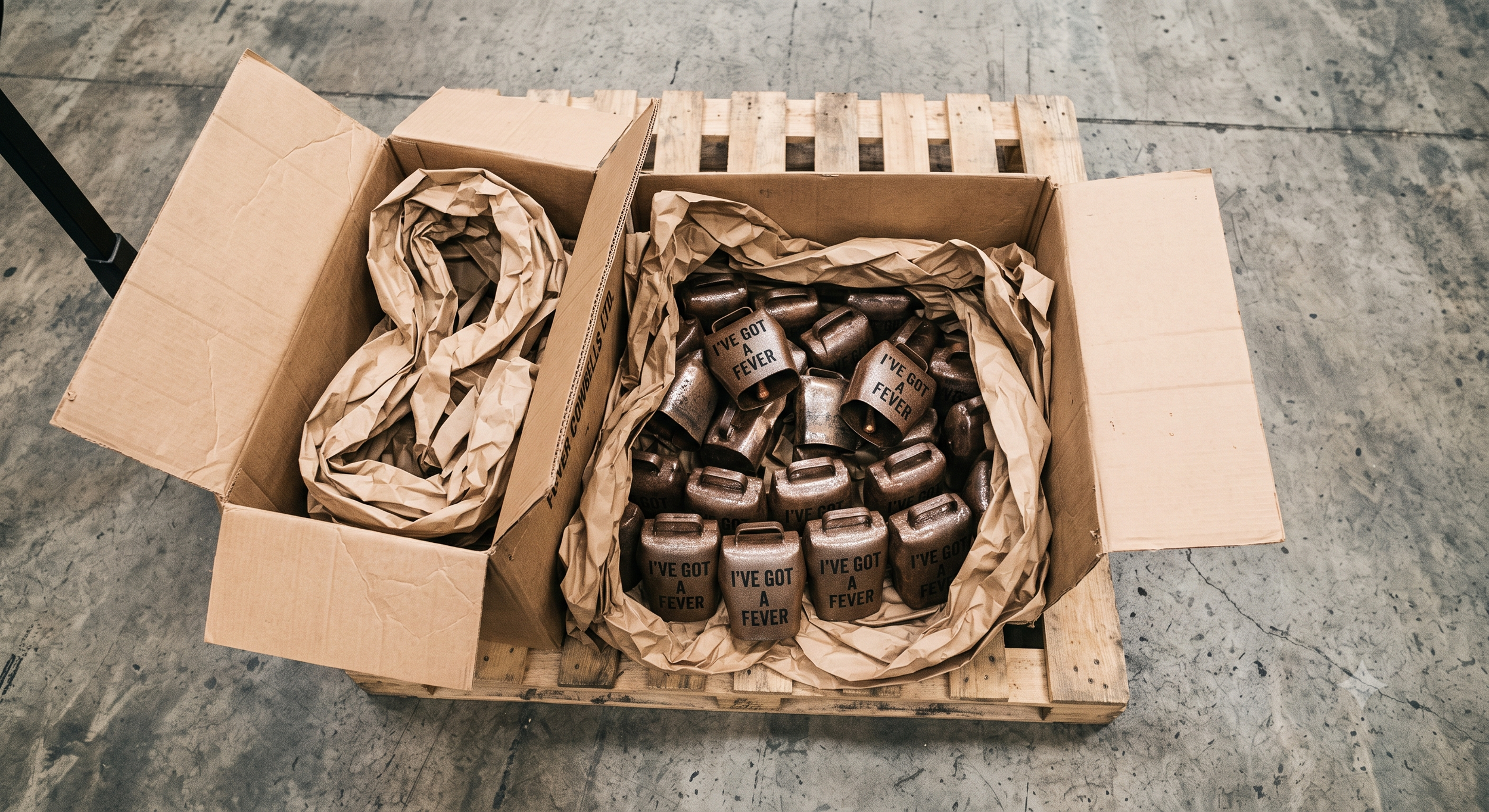
Two different jobs get lumped together as packing material, and mixing them up is what leads to either damaged product or boxes stuffed with paper you paid for. Filling empty space so the product cannot shift is one job. Cushioning a fragile item against shock is another. This page sorts out which materials do which, so you can pack to the product instead of packing everything the same way.
Fill the space, or cushion the product?
Void fill takes up empty room in a box so the contents do not slide around and so the box does not collapse when stacked. Cushioning absorbs shock and vibration to protect something fragile. A sturdy product in an oversized box needs void fill. A delicate instrument needs cushioning. Some orders need both. Knowing which you are solving for tells you what to reach for.
Kraft paper
- Crumpled or in a dispenser, it fills space fast and cleanly.
- Recyclable and easy for customers to dispose of, which matters for retail unboxing.
- Great general void fill for sturdy products in slightly oversized boxes.
- Light cushioning at most. It fills space better than it absorbs a hard drop.
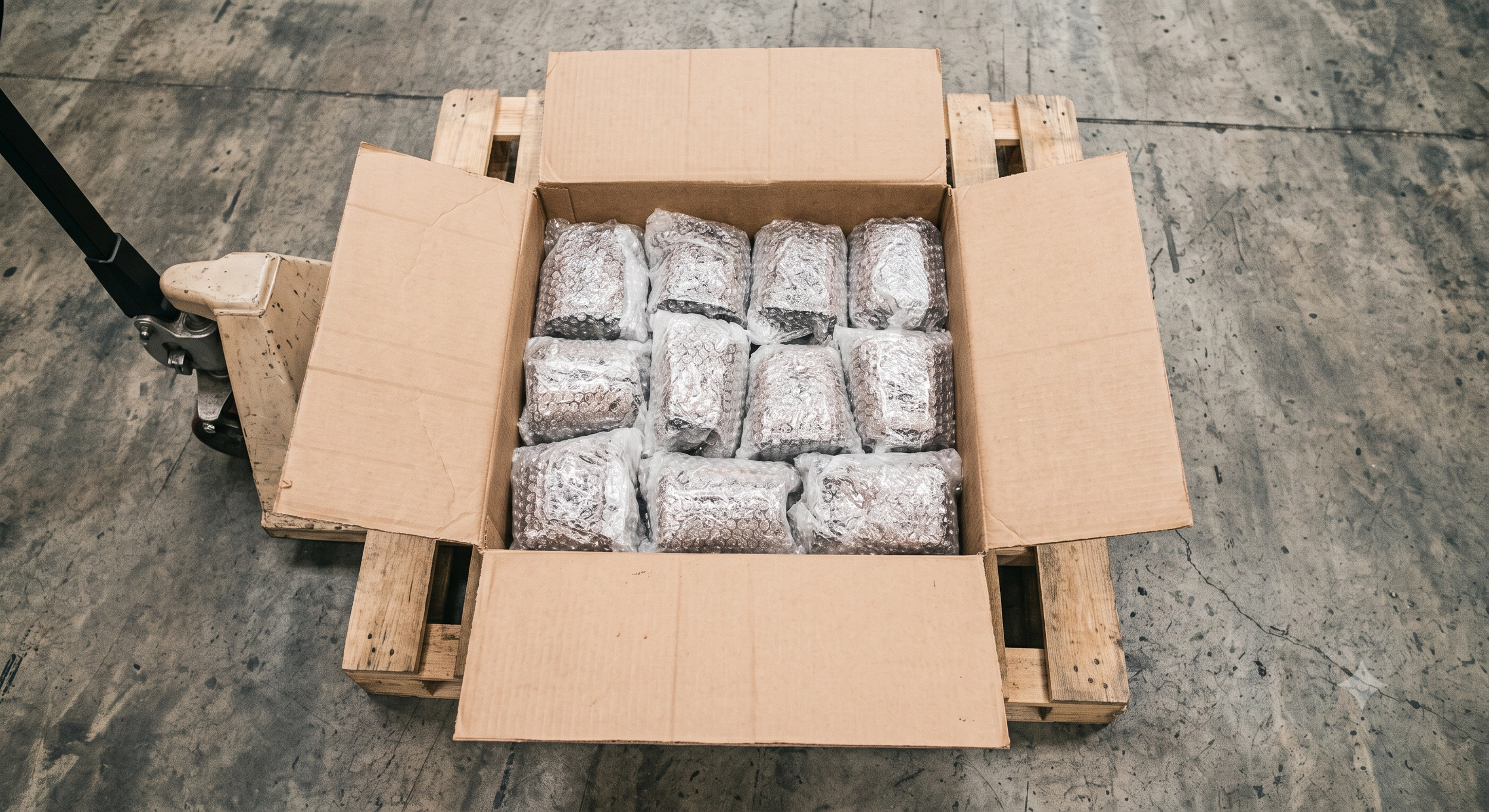
Bubble
- Traps air in pockets to cushion against shock and vibration.
- The go-to for fragile items, electronics, and finished surfaces that scratch.
- Comes in different bubble sizes: small bubble for surface protection, large bubble for heavier cushioning.
- Wraps an item or lines a box. Less economical than paper when you only need to fill space.
ExpandOS, for the hard-to-pack
Some products defeat paper and bubble. Pottery, glass, and small-to-medium machinery components are the usual suspects, the fragile, oddly shaped, or heavy pieces that normally eat rolls of bubble and cans of spray foam and still rattle. ExpandOS is what Atlas reaches for on those.
ExpandOS is a paper-based packing piece, punched cardboard triangles that interlock around the product and lock it in place. It holds an awkward item still the way expanding foam does, without the mixing, the cure time, or the foam fumes. It is recyclable, made from SFI-certified paper, and easy for your customer to break down and toss at the other end.
If a product needs a lot of internal packaging and nothing off the shelf holds it still, this is often the fix. It is a clean alternative to spray foam and a genuine problem-solver we can bring to the table when a fragile or awkward item is driving your damage claims.
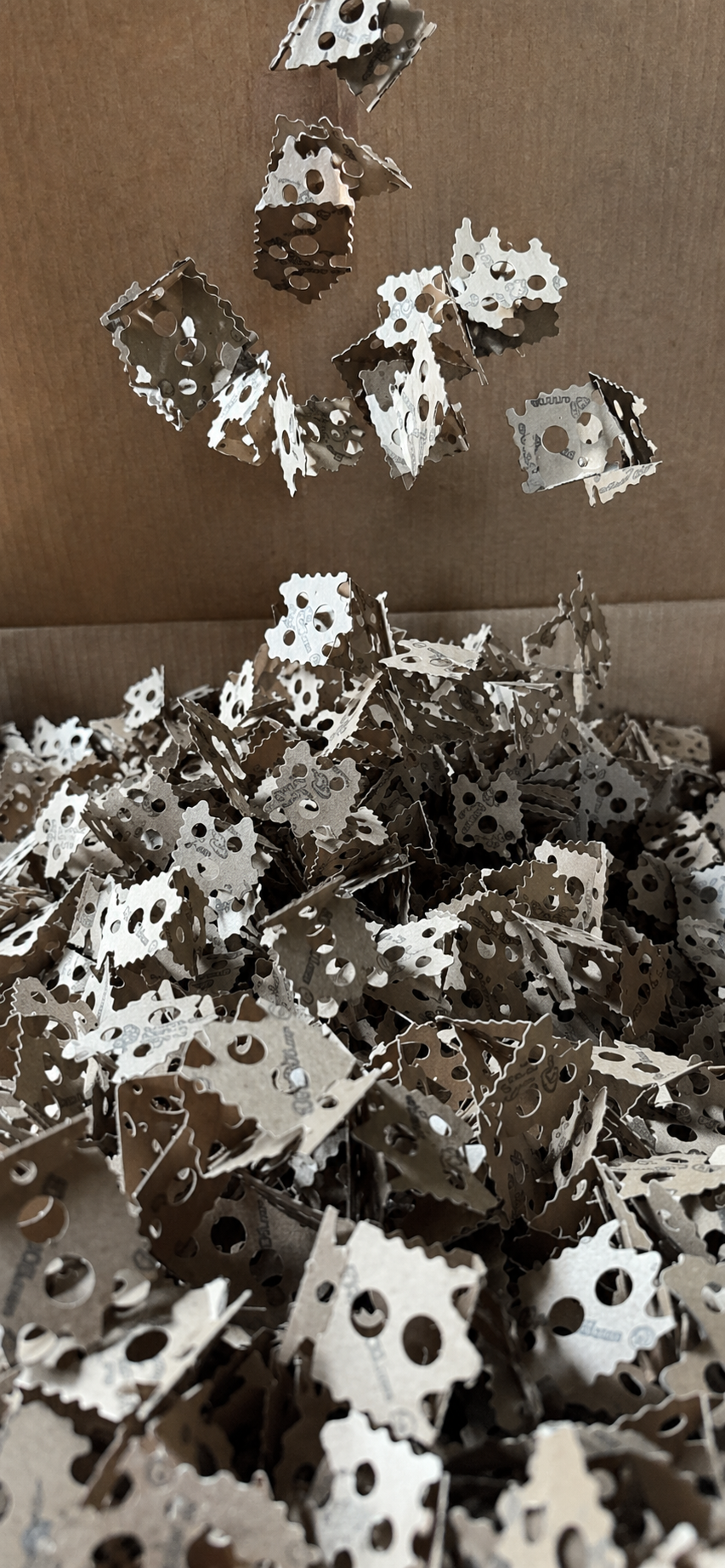
ExpandOS pieces filling a box. The punched triangles interlock around the product and lock it in place.
Loose fill
- Poured around a product to flow into gaps of any shape.
- Handy for irregular items where wrapping is awkward.
- Products can settle in transit and shift toward one side, so it is not ideal for heavy or very fragile items.
- Messier at the packing station and at the customer's end than paper.
Air pillows
Inflated on demand and dropped in to fill space. Very light, very economical for filling large voids around a sturdy product, and low mess. Like loose fill, they fill space more than they cushion a hard shock, so pair them with wrap for anything fragile. Your existing guide compares these directly to paper and bubble, linked below.
A quick way to choose
- Sturdy product, roomy box: kraft paper or air pillows to fill the space.
- Fragile or scratch-prone product: bubble to cushion, then fill any remaining space.
- Fragile, heavy, or oddly shaped and hard to hold still: ExpandOS.
- Odd-shaped item, light and non-fragile: loose fill to flow around it.
- Filling half the box every time: the real fix is a smaller or custom box. See the Corrugated Boxes page.
Frequently asked questions
What is the difference between void fill and cushioning?
Void fill takes up empty space so the contents cannot shift and the box does not collapse when stacked. Cushioning absorbs shock and vibration to protect a fragile item. A sturdy product in a roomy box needs void fill. A delicate one needs cushioning. Some orders need both.
What is the cheapest way to fill empty space in a box?
For a sturdy product, kraft paper or air pillows fill space cheaply and cleanly. But if you are filling half of every box, the real savings come from a smaller or custom box, not more fill.
Do you have a good alternative to spray foam for fragile, oddly shaped items?
Yes. Atlas supplies ExpandOS, a paper-based packing piece that interlocks around the product and locks it in place. It holds awkward items the way expanding foam does, without the mixing, cure time, or foam dust, and it is recyclable and made from SFI-certified paper. It is a strong fit for pottery, glass, and small-to-medium machinery components.
My product keeps arriving damaged. What should I change?
Start by separating the two jobs: is the product shifting because the box is too roomy, or is it taking a shock it cannot absorb? Send us a photo of how it ships now and what is arriving damaged, and we will match the fill or cushioning to the product.
I am filling half of every box with paper. Is that normal?
It is common, but it is a signal. If you are filling that much empty space every time, a smaller or custom box usually cuts your fill cost, your damage rate, and your dimensional shipping charges at once.
Tell us what is arriving damaged, or what you are overpacking, and we will match the fill to the product. The goal is fewer claims without paying to stuff every box.
Get a Quote →