
GMA Pallets: Specifications You Need to Know
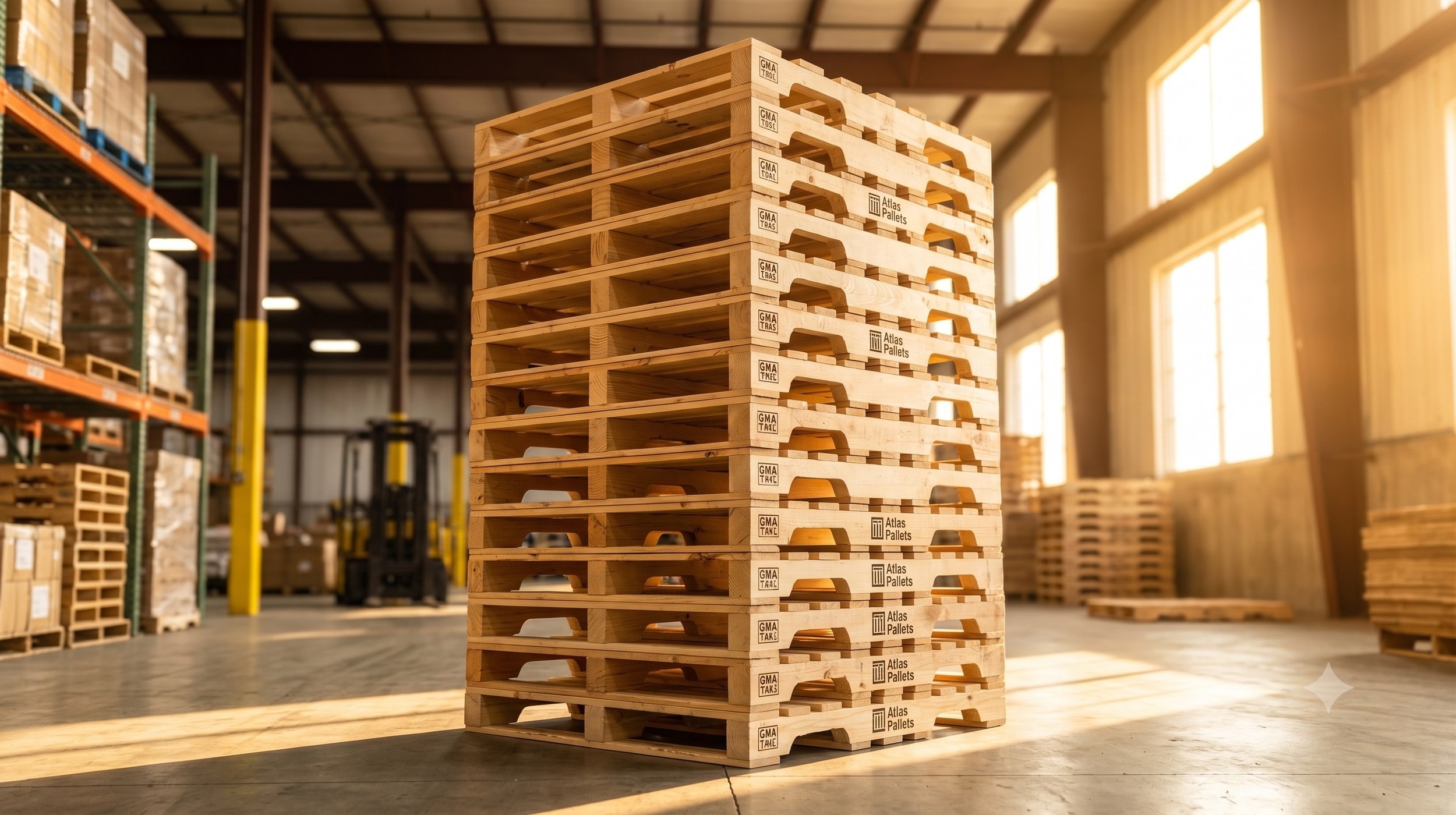
- GMA pallets are the most widely used standard pallet in North America for fast, reliable supply chain movement.
- Their standard size is 48 by 40 inches, with a footprint designed for trailers, racks, and forklifts.
- Most are wood pallets, in new and recycled grades, and repairable when boards or stringers wear out.
- When a load does not fit the 48x40 footprint, a custom wood pallet built to the product is often the better call.
- Industries like grocery, retail, and distribution centers depend on them for consistency.
- Standard sizing helps reduce product damage, support compliance, and keep shipping smooth.
- Reuse, repair, and recycling make GMA pallets a practical sustainability choice.
Introduction
If you work with shipping, storage, or retail, you have likely come across GMA pallets. They play a major role in the supply chain across North America, especially where speed and consistency matter most. Originally tied to standards from the Grocery Manufacturers Association, they became a common format for moving everyday products efficiently. This blog explains what GMA pallets are, their specifications, their materials, their compliance needs, and why so many industries still rely on them.
Understanding GMA pallets in the U.S. supply chain
Across the United States, GMA pallets support the movement of goods from plants to distribution centers and on to grocery stores. They are widely used in the grocery industry and with consumer goods because businesses need one standard pallet that works almost everywhere.
That is why the format became a North American standard. Its standard size works smoothly with common equipment, store delivery systems, and warehouse layouts, which makes it a reliable choice in many supply chain operations.
What makes GMA pallets the standard choice
The main reason the standard GMA pallet stands out is its consistent 48 by 40 footprint. The Grocery Manufacturers Association introduced this size to solve the confusion caused by mixed pallet dimensions in the market. When every pallet follows the same format, shipping becomes easier to plan and manage.
Just as important, that consistency creates a uniform platform for storage, handling, and transport. Forklifts, pallet jacks, warehouse racks, and conveyor systems can all work with fewer adjustments. This helps reduce delays and makes daily operations feel more predictable.
There is also a cost advantage. Businesses can load trailers more efficiently, lower handling time, and reduce product damage caused by unstable or mismatched pallets. In simple terms, standard pallets save time, support reliable workflows, and bring order to high-volume logistics.
Industries relying on GMA pallets
Many sectors depend on GMA pallets because a standard pallet keeps operations moving without extra handling issues. If your business ships high volumes, consistency matters. That is why these pallets are common across networks focused on speed, repeatability, and supply chain efficiency.
You will often see them in:
- grocery shipments moving to stores and back rooms
- consumer goods distribution for packaged products and daily essentials
- distribution centers handling large inventory flows
- manufacturing operations that need a standard pallet for outbound freight
- warehousing environments where stacking and routing must stay consistent
Each of these sectors benefits in a similar way. Standardization simplifies loading, storage, and delivery while reducing confusion between facilities. That shared format helps teams move products faster, use equipment more effectively, and keep costs under control.
Official GMA pallet dimensions and specifications
When people ask about official GMA pallet dimensions, they are usually referring to the 48 by 40 format used across much of North America. These dimensions matter because they support compatibility with warehouse systems, forklifts, and North American truck trailers.
Beyond size, GMA standards also cover layout and construction. A typical GMA pallet includes top deck boards, bottom deck boards, four-way entry, and a load rating suited for common freight. The next sections break down those details so you can see how the design works in practice.
Standard size: 48 by 40 inches explained
The 48 by 40 format became the standard because it works well with U.S. shipping and storage systems. It fits common racking layouts and makes better use of trailer space. It also creates a repeatable footprint for businesses that handle large volumes every day.
Here are the core dimensions and components at a glance:
| Component | Standard GMA detail |
|---|---|
| Footprint | 48 inches long by 40 inches wide |
| Stringers | Three, with two notches per side for four-way entry |
| Top deck boards | Seven, a wider board on each end and five in the center |
| Bottom deck boards | Five, end boards plus three inner boards |
| Forklift entry | Four-way (notched) for faster handling |
| Dynamic load (in motion) | Roughly 2,300 to 2,800 pounds, depending on grade |
| Static load (stacked) | Much higher when stationary, varies by grade and build |
Because the dimensions are so widely recognized, the design works smoothly with standard trailers, forklifts, and warehouse systems. That means fewer fit issues, better planning, and easier movement through storage and shipping operations.
Structure, load capacity, and weight
A GMA pallet is built with deck boards on the top and bottom, supported by three stringers. The notches allow four-way access, so a forklift or pallet jack can lift the pallet from different sides. That flexibility matters in busy warehouses where speed is important.
On strength, the numbers vary quite a bit by grade and condition, so it helps to think in ranges. In motion, a typical GMA pallet handles roughly 2,300 to 2,800 pounds. Sitting still and stacked, a sound pallet holds far more. Because ratings move with the grade and build, many crews plan around a conservative working limit to leave room for wear.
For day-to-day use, this structure helps the pallet stay stable during lifting, stacking, and transport. The standard format gives operators a dependable base for shipping without constant adjustments.
Materials used in GMA pallets
Most GMA pallets are made from wood because wood is widely available, repairable, and practical for repeated use. Many are built from hardwood, softwood, or mixed material, and new wood pallets are still common in food, retail, and distribution settings. When the standard build cannot handle a load well, a custom wood pallet is the usual next step.
Wood types and timber selection
Wood remains the most familiar option for GMA use. Pallets may be made from hardwood, softwood like pine, or a mix, depending on availability and grade. New wood pallets are often selected when appearance, consistency, or first-use strength matters most.
Several factors affect timber selection:
- the need for strength and stable handling in daily use
- the target cost for shipping and storage operations
- whether the pallet will be new, recycled, or remanufactured
- export or compliance needs that require heat treatment
Heat treatment is especially important when pallets are used for international shipping. It helps meet ISPM-15 requirements, and the treated wood carries a stamp that includes a country code. In general, good timber choice and proper treatment improve pallet quality, extend service life, and make wood a dependable option for many industries.
Custom-built wood pallets: when they beat a standard GMA
The standard 48x40 is the right tool most of the time, but not for every load. When a product does not fit the standard footprint, forcing it onto a GMA pallet can cause overhang, wasted space, or damage. A custom wood pallet built to the load often pays for itself in fewer damaged goods and better use of trailer space.
A custom wood build tends to make sense when:
- the product is oversized, long, or an odd shape that overhangs a 48x40 deck
- the load is unusually heavy or concentrated, so it needs extra stringers, thicker boards, or hardwood
- you are shipping costly machinery or equipment that deserves a base built to fit and protect it
- small parts would fall through a standard deck, so a tighter or closed-deck layout is better
- the pallet has to match a specific machine, rack, or automated system
A custom pallet costs more per unit than a standard one, so it is worth weighing your damage rates and how your product cubes out. On high-value or hard-to-fit loads, the trade often works out. Describe the product and the route and a good supplier can tell you whether standard or custom is the better fit.
Compliance and standards for GMA pallets
Compliance matters because GMA pallets are closely tied to food industry handling, safe transport, and consistent product support. The standards focus on dimensions, construction, transportability, and condition, especially when pallets are reused or repaired.
The organization behind these standards began as the Grocery Manufacturers Association and is now known as the Consumer Brands Association. Grading also affects buying decisions. Buyers may choose premium grade, Grade B, or avoid Grade C units depending on risk, appearance, and handling needs. Export cases may also require treatment marks that include a country code.
Food industry needs and GMA guidelines
In the food industry, pallet quality is not just about moving freight. It also affects cleanliness, safety, and product condition. GMA guidelines were created to support better transport and storage for food and beverage goods, where damaged or unstable pallets can increase the chance of product damage.
For many users, pallet condition matters as much as pallet size. New wood pallets are often preferred when appearance and clean presentation are important, especially in store-facing environments. Higher-grade recycled units may also be used when they remain structurally sound and visually acceptable.
Heat treatment becomes important when pallets are used in export channels or when a buyer calls for it. Along with solid construction and careful handling, proper treatment helps businesses meet operational requirements while reducing avoidable shipping issues.
Who sets the GMA specifications
The original source of the specifications was the Grocery Manufacturers Association. It developed a standard pallet format to bring consistency to grocery and consumer goods logistics. Before that, mixed pallet sizes created waste, delays, and avoidable damage across shipping networks.
Today, that organization is known as the Consumer Brands Association. Even with the name change, the format it helped establish still shapes the standards used across many U.S. operations. The 48 by 40 footprint remains the expected choice in a large part of the market.
These standards are maintained in practice through widespread industry use, buyer requirements, recyclers, manufacturers, and logistics partners. In other words, the system works because multiple stakeholders keep depending on the same shared format every day.
Comparing GMA pallets to other common pallet types
A clear comparison helps you choose the right pallet for your operation. While GMA pallets are the leading standard in the United States, other formats serve different regions, loads, and handling systems. That matters if your business works across borders or uses specialized equipment.
You may come across block pallets, custom pallets, skids, and the EPAL pallet used in Europe. Each option has different dimensions, strengths, and tradeoffs. The next sections show where GMA fits best and when another type may be more practical.
Euro pallets versus GMA pallets
GMA pallets and the EPAL pallet serve similar purposes, but they are built around different regional systems. In the U.S., the common size is 48 by 40 inches. In Europe, a widely used option is the 1200 by 800 millimeter pallet, which has a different footprint and fit.
Here is a quick side-by-side:
| GMA pallet | Euro (EPAL) pallet | |
|---|---|---|
| Footprint | 48 x 40 inches | 1200 x 800 mm (about 47.2 x 31.5 in) |
| Main region | North America | Europe |
| Best fit | U.S. trailers, racks, and retail flow | European lanes and equipment |
For international shipping, those differences matter. A pallet that fits one regional system may not suit another. Treatment marks, sizing standards, and country-code requirements can also affect whether a shipment moves smoothly across borders.
Key differences with skids and custom pallets
Not every load should ride on a GMA pallet. Skids and custom pallets exist for jobs where the standard is not the best fit. A skid usually has a simpler base, while a custom pallet is built around a special product, weight need, or unusual dimension.
Key differences include:
- a standard pallet offers a consistent size for repeat shipping workflows
- skids may be used for simpler or lighter-duty support needs
- custom pallets can be built for fragile, oversized, or heavy products
- custom builds may include stronger boards or added product protection
If your operation values speed, broad compatibility, and easy replacement, GMA usually makes the most sense. If your goods have special handling demands, a custom build can reduce damage or improve fit during transport.
Advantages of GMA pallets for shipping and logistics
GMA pallets support supply chain efficiency because one standard pallet can move smoothly through different sites, systems, and vehicles. That consistency helps workers in distribution centers handle freight faster and with fewer loading issues.
There is also a direct benefit for the movement of goods. Standard sizing improves trailer use, reduces delays, and can lower product damage caused by poor fit or unstable stacking. These benefits are why GMA pallets remain a practical choice for shipping, storage, and day-to-day logistics across many industries.
Impact on warehouse storage and freight efficiency
In warehousing, small differences in pallet size can create big problems. The standard size used for GMA pallets helps teams plan warehouse racks, floor stacks, and trailer loading with more confidence. Because the footprint stays consistent, equipment and processes do not need constant adjustment.
That consistency improves operations in several ways:
- warehouse storage layouts are easier to organize
- trailer space is used more efficiently in standard trailers
- conveyor systems can handle freight with fewer disruptions
- a pallet jack or forklift can approach with predictable clearance
- supply chain efficiency improves through faster turnaround
For freight planning, this matters a lot. A familiar size reduces wasted space and simplifies load building, which can lower costs over time. If you want smoother handling from dock to delivery, standardization gives you a clear advantage.
Durability and environmental benefits
GMA pallets are built to handle regular shipping demands, which is why they remain a dependable option for repeated use. Good construction, practical load capacity, and repairability all support a longer service life. That durability helps businesses avoid frequent replacement and keep operations steady.
There are also clear environmental advantages:
- recycling keeps usable pallets in circulation longer
- repairs extend life and reduce raw material demand
- reusing pallets supports better sustainability practices
- fewer failures can reduce waste tied to damaged goods
This matters beyond cost savings. When pallets last longer and stay in use through repair or resale, the environmental impact of shipping improves. A durable platform also helps protect products, which means less waste from breakage during transport or storage.
Sourcing, recycling, and reusing GMA pallets
If you need pallets for shipping or storage, you can buy GMA pallets new, recycled, or remanufactured. Many businesses also sell pallets once they no longer need them, which creates a steady market for second-life units in different grades.
That resale and repair cycle supports recycling and reuse. Instead of discarding worn pallets too quickly, companies often sort, repair, and return them to service. The next sections explain where to buy or sell and how recycling supports sustainable use over time.
Where to buy and sell GMA pallets
You can buy GMA pallets from pallet manufacturers, recyclers, and suppliers that handle new or used inventory. If cost matters, recycled units and Grade B pallets are often a practical choice. If appearance matters more, higher-grade options may be a better fit.
Common places to buy or sell include:
- pallet manufacturers offering new and remanufactured stock
- pallet recyclers that repair and resell used units
- storage facilities with surplus pallet inventory
- distribution centers rotating out excess pallets
- regional buyers handling bulk pallet recovery and resale
Local market conditions can affect price, grade availability, and pickup options. Working with a knowledgeable supplier helps you match pallet quality to your needs, whether you want premium units for store use or repaired ones for warehouse shipping.
Recycling and sustainability
Most recycling programs start by sorting pallets by condition and grade. Usable units are repaired and sent back into service, while badly worn ones are broken down for parts or repurposed into other materials. This approach keeps value in the system for longer.
The sustainability benefits are clear:
- reusing reduces demand for new materials
- recycling supports lower landfill waste
- repaired pallets can serve many more trips
- better lifecycle management can improve environmental impact
For the best results, inspect pallets regularly and match grade to task. Higher grades work well where appearance matters, while repaired units can handle warehouse duties. This kind of smart reuse extends pallet life and supports a more practical, circular shipping model.
Conclusion
GMA pallets play a crucial role in the U.S. supply chain, offering a reliable standard for many industries. Their dimensions and construction support compatibility across logistics systems, while their durability keeps storage and transportation efficient. And when a load does not fit the standard 48x40, a custom wood pallet built to the product can be the smarter choice. By weighing both options, from cost and availability to fit and durability, you can make informed decisions for your operation. For help choosing the right pallet, standard or custom, reach out and we will point you in the right direction.
Frequently asked questions
When should I choose a custom pallet instead of a standard GMA?
Choose custom when the load does not fit the 48x40 footprint, is unusually heavy or fragile, or has to match a specific machine or automated system. A custom wood pallet sized to the product can cut damage and use trailer space better. For everyday shipping that fits the standard size, a GMA pallet is usually the better value.
How does GMA pallet size affect logistics?
The 48 by 40 size improves supply chain efficiency by fitting common warehouse layouts, handling equipment, and standard trailers. Because the footprint is predictable, businesses can load, stack, and move freight with fewer delays, better space use, and more consistent operations.
What is the difference between GMA pallets and standard pallets?
GMA pallets are a specific type of standard pallet used widely in North America. Their footprint is 48 by 40 inches, giving them a consistent size that works across many U.S. systems. Other standard pallets may follow different regional formats, so they are not always interchangeable with GMA.
About Atlas Pallets & Packaging
Atlas Pallets & Packaging is a Midwest pallet and packaging supplier based in Naperville, Illinois, in the heart of the Chicago freight market. We help manufacturers, warehouses, and 3PLs get the pallets they need from one reliable source, whether that is a standard 48x40 or a custom wood pallet built to your load. Tell us what you are shipping and we will help you land on the right size, grade, and build.
Call or text: 630-765-5476
Email: atlaspalletsllc@gmail.com