
Packaging for Industrial Equipment Shippers: Custom Pallets, Laminated Packaging, One Relationship
Industrial equipment does not fit a stock pallet. Process instrumentation does not survive on standard packaging. Atlas designs the build to the product and the program.
Industrial equipment is the broadest category Atlas serves. Process instrumentation. Level sensors. Commercial kitchen equipment. Plastic molding machines. Popcorn machines that range from countertop units to two-story builds. Tool storage manufacturers shipping cabinets and workstations to dealers. The products do not have one thing in common except this: none of them fit a stock pallet, and most of them need more protection than a stretch wrap can provide.
Every one of these programs has spec requirements that pallets and packaging from a catalog cannot meet. The pallet has to match the product footprint, not the GMA standard. The packaging has to protect the product through a long-haul truck ride to a dealer floor or an end-user dock. Sometimes the program needs both. A custom pallet underneath, laminated packaging on top, and the two specs designed to work together on the same dock.
The pain point
Stock pallets do not fit the product. A 72 by 32 commercial kitchen unit hangs off the side of a 48 by 40 pallet. A 44 by 25 plastics mold is too heavy for the deck boards of a standard pallet, and there is wasted space all around it if a 48x40 pallet is used. A 30 by 78 tool cabinet is never going to fit neatly on a standard pallet. It needs a custom pallet, where the casters can rest directly above the reinforced stringers.
Stock packaging does not protect sensitive equipment. Stretch wrap holds the load on the pallet, but it does not protect the corners of a precision instrument from a forklift tine in the dealer warehouse. It does not stiffen the load for a long-haul ride. It does not give the receiver an obvious place to grip a tall stack.
Industrial equipment OEMs end up with two suppliers, two contracts, and two phone numbers. The pallet vendor on one side. The packaging vendor on the other side. The two suppliers do not always talk to each other, which is how mistakes happen. Steel banding can slide off if there isn’t a banding notch to keep it aligned. Or loads can shift, if the pallet isn’t the exact size to allow the cornerboards to be secured to the pallet corners.
What Atlas builds for this segment
Custom pallet design for product-specific footprints
Atlas designs the deck to the product, not the other way around. The 72 by 32 two-way commercial kitchen pallet. The 72 by 21 block heat-treated skid for process instrumentation. The 44 by 25 three-stringer for plastics. The 30 by 78, 36 by 60, 30.5 by 40.5, and 48 by 60 sizes for a multi-product tool storage catalog. Whatever the product footprint is, Atlas builds the pallet to it. No overhang. No flex. No tipping.
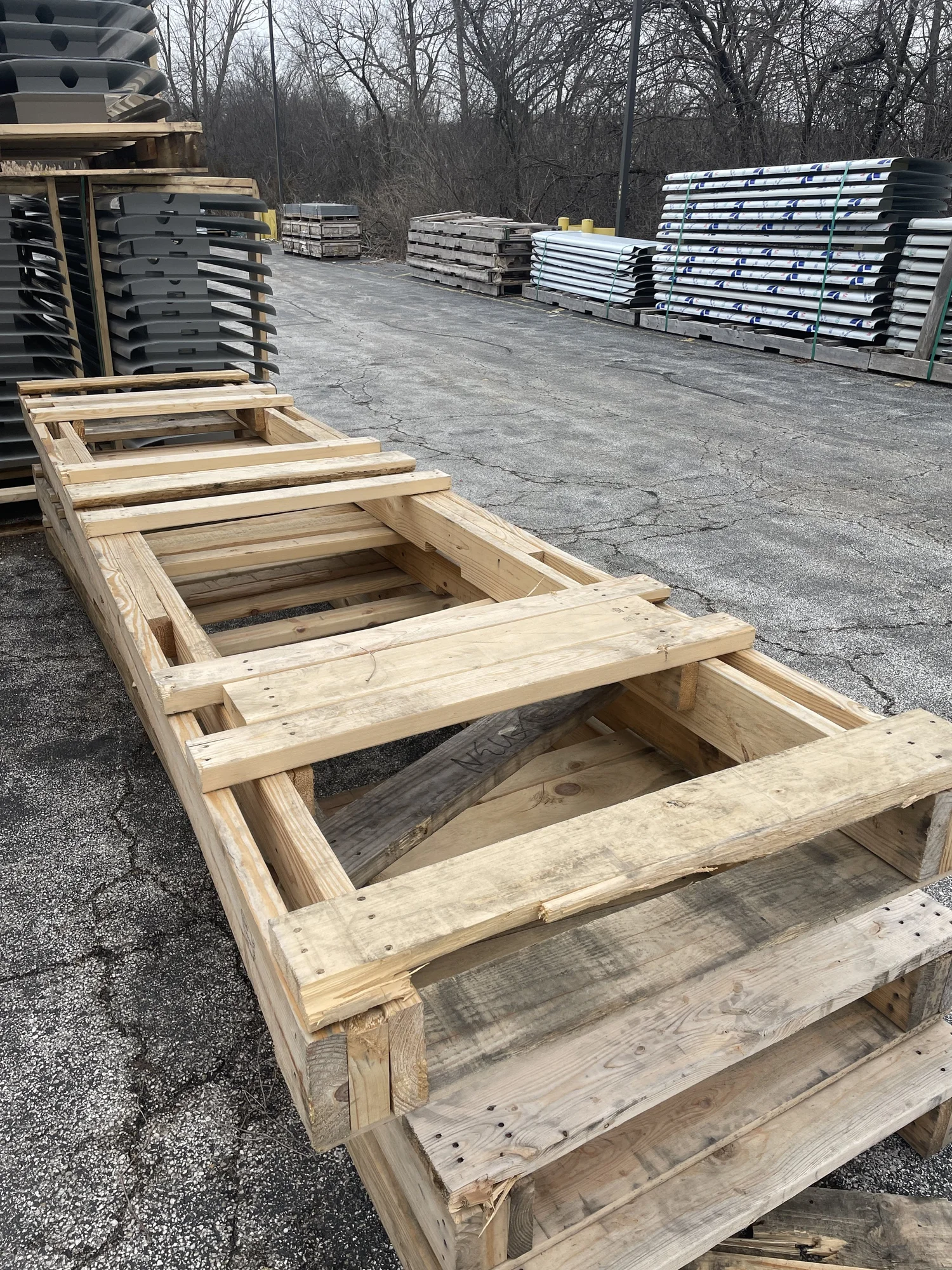
This 96x36 heavy duty custom pallet features four 2x6 stringers, with side slots for dropping in sidewall dunnage. Need to move a generator? A tractor powertrain? Atlas has you covered.
Laminated paperboard packaging integrated with the pallet program
Atlas brings the laminated packaging into the same program. FlatCrates for a flat-stack ship-and-receive workflow. Cornerboards for tall stacks where the corners take the lateral force. U-Crates for products that need partial enclosure without a full crate. The packaging spec is designed alongside the pallet spec so the two work as one shipment, not two.
Custom void fill for simplicity and time
For products that need cushioning inside the box, Atlas supplies more than the expected Kraft paper, air pillows, and bubble wrap. A packing peanut on steroids, ExpandOS is a paper-based packing piece that in many cases does the job of expanding foam. The pieces are punched cardboard triangles that interlock around the product and lock it in place, so parts do not shift or settle to the bottom of the box on a long ride. The material is recyclable and made from SFI-certified paper, which matters to receivers with sustainability targets on the dock. Want to ship a brick and a light bulb together in the same box? ExpandOS’s peanuts will hold them rigidly in place throughout the whole shipment.
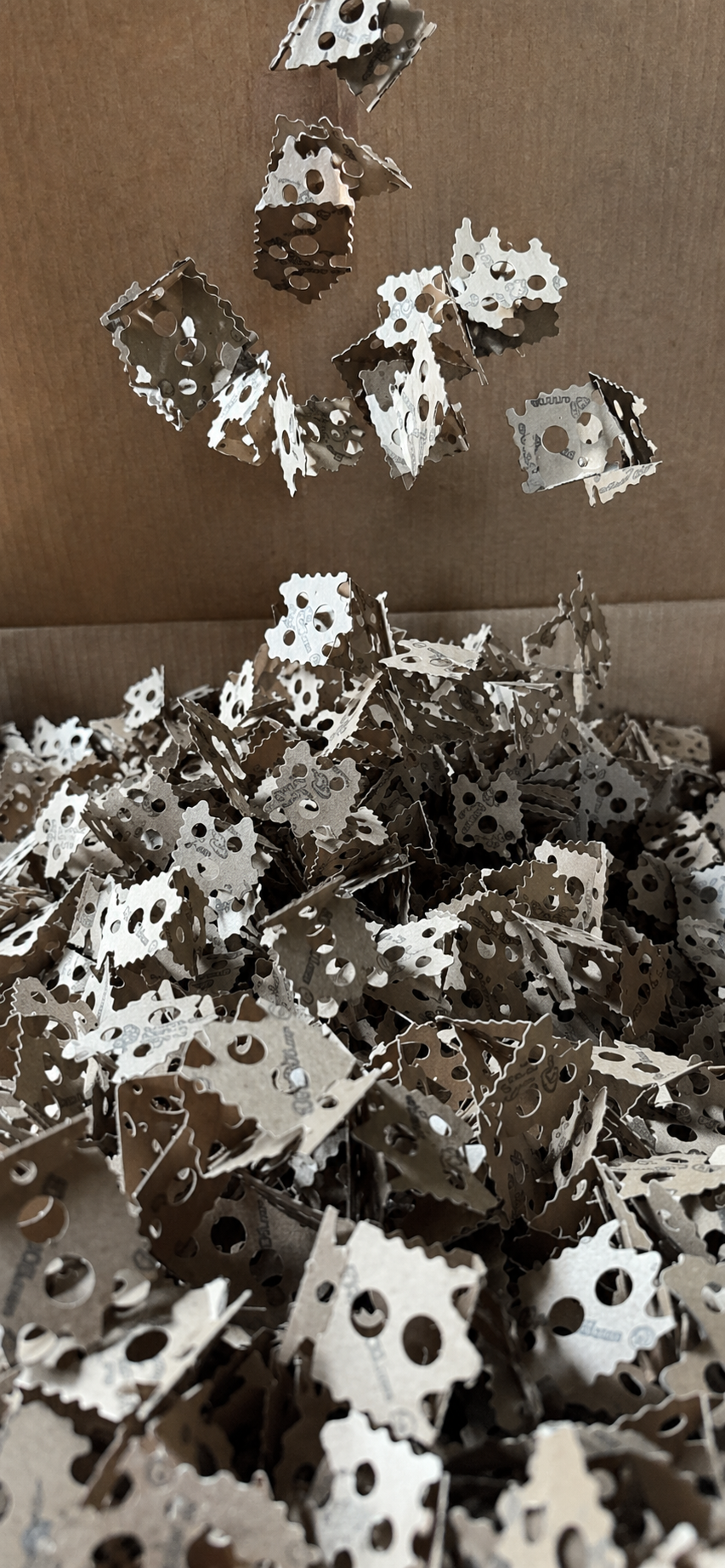
ExpandOS pieces filling a box. The punched triangles interlock around the product and lock it in place.
Multi-product order under one Atlas relationship
One conversation. One quote process. One delivery schedule. One invoice. When the receiver flags a packaging issue on the dock, the call goes to one supplier, who has visibility on both sides of the spec.
Lean by design, one point of contact
Atlas runs lean by design. That structure is what keeps a multi-product, multi-spec program accountable to a single point of contact. When the spec changes mid-program, you have one phone call to make. When the dealer launches a new product line, there is a single supplier who is walking with you through the packaging design process.
What Atlas has shipped in this segment
1,200
Custom 72 by 32 pallets shipped to a national commercial kitchen equipment manufacturer
325
Block heat-treated skids shipped to an Illinois-based process instrumentation manufacturer
260
Three-stringer 44 by 25 custom pallets shipped to a Chicago-area plastics molding manufacturer
1,300
Custom pallets across four sizes shipped to a national professional tool storage manufacturer
Plus the laminated packaging multi-product relationships at the FlatCrate, Cornerboard, and U-Crate level with a North American industrial equipment OEM and others.
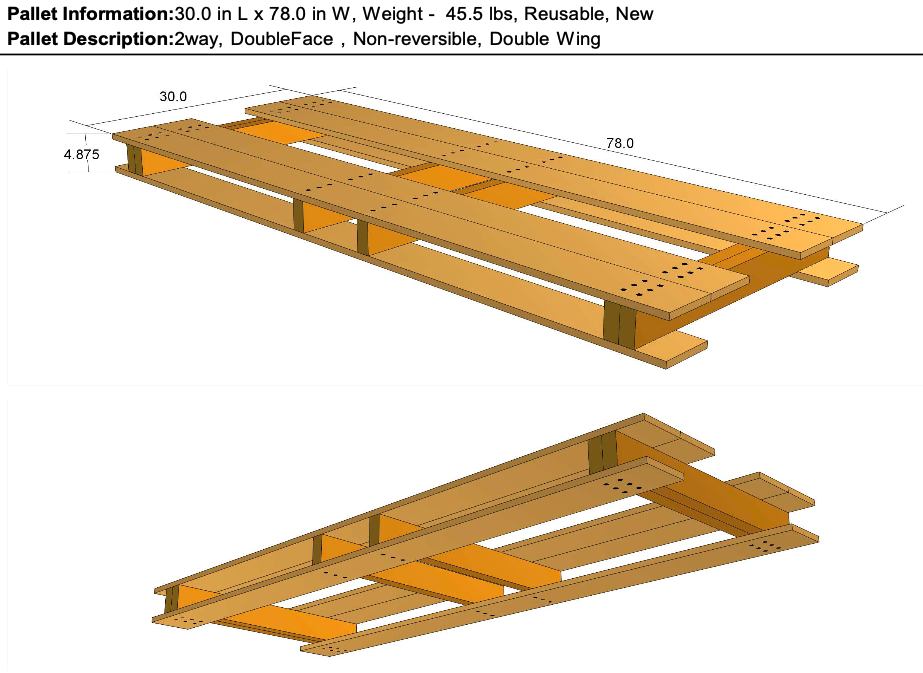
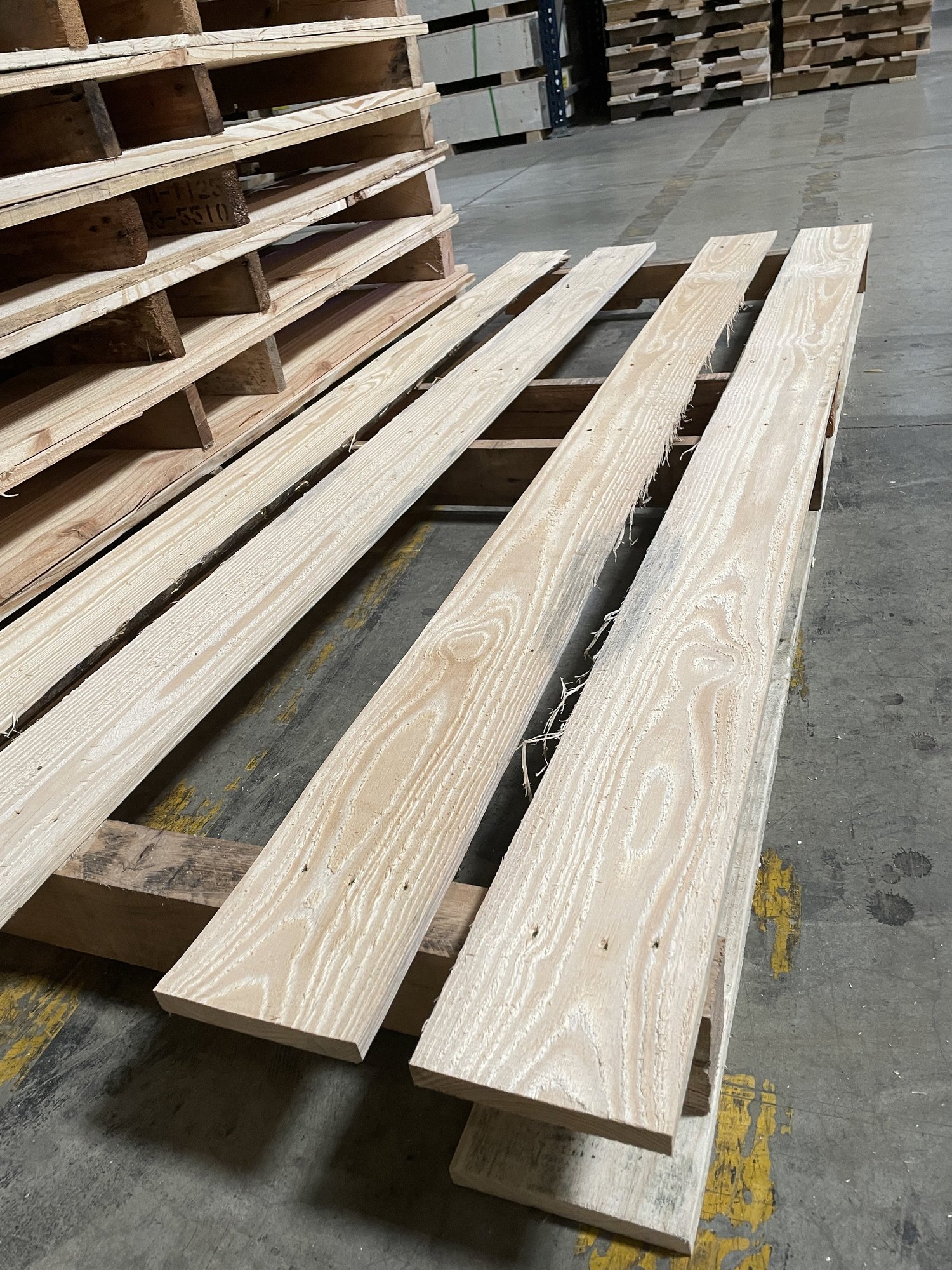
The 30 by 78 reinforced pallet, from the design phase to the finished build. Every custom spec starts as a drawing the customer approves.
The multi-product Atlas relationship
The pattern that defines this segment is the multi-product order. The OEM does not just need a pallet. The OEM needs the pallet, the cornerboards, the dunnage, and sometimes the tape and the strapping. Each one of those is a spec. And if each has a different supplier, each one of those is a delivery. And the OEM does not want to manage that across four phone numbers.
Atlas runs the whole thing under one relationship. The custom pallet program and the laminated packaging program ship on the same delivery schedule. The cornerboards arrive when the pallets do. The dunnage shows up before the assembly line needs it. The OEM has one point of contact, one quote conversation, and one invoice for the program.
Atlas's lead time on industrial equipment programs
A brand-new custom pallet spec moves from approved drawing to first delivery in 7 to 10 days. Repeat orders on something Atlas has built before run on a 7 day cadence. Recurring scheduled programs run faster than that. The build queue is reserved. The truck cadence is set.
Laminated packaging runs on its own lead time, which Atlas quotes alongside the pallet program. Most laminated spec runs ship within the same window. When the two specs run together, Atlas coordinates the deliveries so the OEM receives both sides of the program in one wave.
Rush work is possible. The freight cost is higher. Atlas tells you what the lead time looks like before you commit, on both the pallet and the packaging side.
Common questions from industrial equipment shippers
Can Atlas build a pallet sized to our product instead of the standard 48 by 40?
Yes. Atlas designs the deck to the product footprint, including sizes like 72 by 32, 72 by 21, 44 by 25, and a four-size library for one tool storage catalog. No overhang, no flex, no tipping.
Can the pallet and the protective packaging come from one supplier?
Yes. Atlas runs the custom pallet program and the laminated packaging program under one relationship, with one point of contact, one quote conversation, and one invoice. The specs are designed to work together on the same dock.
What void fill does Atlas supply for fragile equipment?
Beyond Kraft paper, air pillows, and bubble wrap, Atlas supplies ExpandOS, a paper-based packing piece that interlocks around the product and locks it in place. It is recyclable, made from SFI-certified paper, and in many cases does the job of expanding foam.
What is the lead time on a new custom pallet spec?
A brand-new spec moves from approved drawing to first delivery in 7 to 10 days. Repeat builds run on a 7 day cadence, and recurring scheduled programs run faster than that.
Send the product footprint, the destination type (dealer, end-user, distribution center), and the cadence. Atlas calls back the same day with a real quote, on the pallet and the packaging side both.
Get a Quote →